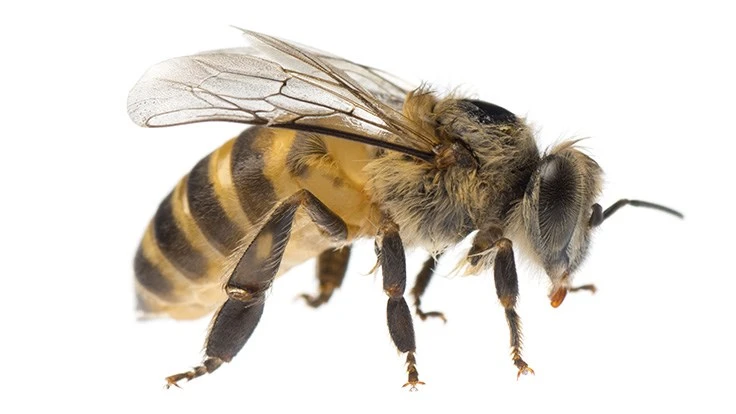
WASHINGTON-- The U.S. Environmental Protection Agency (EPA) announced a preliminary pollinator risk assessment for the neonicotinoid insecticide, imidacloprid, which shows a threat to some pollinators. EPA’s assessment, prepared in collaboration with California’s Department of Pesticide Regulation, indicates that imidacloprid potentially poses risk to hives when the pesticide comes in contact with certain crops that attract pollinators.
“Delivering on the President’s National Pollinator Strategy means EPA is committed not only to protecting bees and reversing bee loss, but for the first time assessing the health of the colony for the neonicotinoid pesticides,” said Jim Jones, assistant administrator of the Office of Chemical Safety and Pollution Prevention. “Using science as our guide, this preliminary assessment reflects our collaboration with the State of California and Canada to assess the results of the most recent testing required by EPA.”
The preliminary risk assessment identified a residue level for imidacloprid of 25 ppb, which sets a threshold above which effects on pollinator hives are likely to be seen, and at that level and below which effects are unlikely. These effects include decreases in pollinators as well as less honey produced.
For example, data show that citrus and cotton may have residues of the pesticide in pollen and nectar above the threshold level. Other crops such as corn and leafy vegetables either do not produce nectar or have residues below the EPA identified level. Additional data is being generated on these and other crops to help EPA evaluate whether imidacloprid poses a risk to hives.
The imidacloprid assessment is the first of four preliminary pollinator risk assessments for the neonicotinoid insecticides. Preliminary pollinator risk assessments for three other neonicotinoids, clothianidin, thiamethoxam, and dinotefuran, are scheduled to be released for public comment in December 2016.
A preliminary risk assessment of all ecological effects for imidacloprid, including a revised pollinator assessment and impacts on other species such as aquatic and terrestrial animals and plants will also be released in December 2016.
In addition to working with California, EPA coordinated efforts with Canada’s Pest Management Regulatory Agency. Canada’s Imidacloprid pollinator-only assessment – also released today – reaches the same preliminary conclusions as EPA’s report.
Latest from Garden Center
- Proven Winners partners with Pure Line Seeds to offer vegetable plants
- [WATCH] Taking root: The green industry’s guide to successful internships
- Award winners announced for 2026 PHS Philadelphia Flower Show
- Kansas City botanical garden Powell Gardens acquires IGC Colonial Gardens
- Art Van Wingerden appointed chair-elect of American Floral Endowment
- U.S. horticulture operations report $18.3 billion in sales: USDA
- Stonehouse Nursery announces ownership transition from founders to nursery manager
- From Structure to Storefront: The Retail Greenhouse Features Worth Planning For