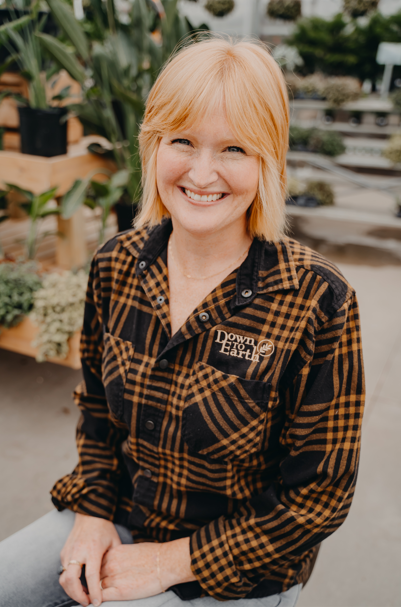
Down to Earth Garden Center in Eau Claire, Wisconsin.
In the green industry, people often assume the biggest challenges revolve around weather, inventory, pests or supply chains.
But those of us who have spent time in this work know the deepest challenges, and the greatest opportunities, come from leading people. Growing teams is every bit as important as growing plants, and it requires the same level of attentiveness, consistency and care.
At Down to Earth Garden Center in Eau Claire, Wisconsin (#66 on Garden Center magazine's 2025 Top 100 Independent Garden Centers List), we have spent years learning how to cultivate stronger teams in a fast-paced, seasonal and multigenerational environment. We’ve asked hard questions, listened to our people, tested new processes and embraced innovation.
The journey hasn’t been linear; growth rarely is. But through intentional effort, we have developed a culture centered around unity, accountability, ownership and shared success.
This narrative reflects what we have learned, what works, what matters and what continues to shape our path forward.
The core challenge: Building a unified, engaged team
Every leader eventually faces the same fundamental questions:
- How do I begin creating team unity and engagement?
- How do I get people to actively contribute to our goals?
- How do I cultivate an ownership mindset in my team?
- How do we collectively solve problems instead of working in silos?
These questions are not signs of weakness; they are signs of intentional leadership. They remind us that unity isn't automatic and engagement isn't accidental. They must be built, nurtured and strengthened over time.
In our early years, we often relied on good intentions, assuming everyone would naturally align. But as our company grew, across divisions, properties and roles, we realized that alignment requires structure, communication and shared purpose. People want to contribute, but they need clear expectations and a sense of belonging to do so.
This awareness brought us to the turning point that shaped our culture.
Our breakthrough: Move slow to accelerate forward
For a long time, we moved quickly because we had to. Growth, customer demand and seasonal intensity kept us sprinting from one thing to the next. But we discovered an essential truth: The fastest path forward is rarely the rushed one.
We made a conscious shift. We now move slow to accelerate forward.
This philosophy doesn’t mean we lack urgency. It means we choose clarity over chaos, intentionality over reaction and alignment over speed.
By slowing down to examine the “why,” listen to our people, design systems and train effectively, we have created a foundation strong enough to support real acceleration. This shift has fundamentally improved how we lead, communicate, develop talent and make decisions.
Like plants that root deeply before they grow upward, we pause just long enough to ensure that our next step is the right one.

Our framework for progress: S.P.E.E.D.
To create alignment and ownership, we needed a framework, something simple, repeatable and clear. What emerged was S.P.E.E.D.: Survey, Plan, Execute, Evaluate, Decide/Direct. It became our rhythm for problem-solving, communication and leadership.
S: Survey
We begin with listening. Whether it’s customer trends, team concerns or operational gaps, we start by understanding what’s really happening. Surveying includes walk-throughs, team conversations, anonymous feedback, data collection and observation without judgment. This step ensures that decisions are rooted in reality rather than assumption.
P: Plan
Once we know the landscape, we plan our next right step. The goal is not perfection; it’s clarity. A good plan gives people confidence and reduces confusion. It creates alignment and helps each team member understand how their role supports the bigger picture.
E: Execute
Execution is where action and accountability meet. It's doing what we say we will do. Clear execution builds trust, within teams and across the company.
E: Evaluate
After we act, we assess the outcome. Did it work? Did it create friction? Did it improve workflow? Did it benefit the customer experience? Evaluation helps us grow without repeating mistakes.
D: Decide/Direct
Finally, we determine how to refine or redirect our approach. Leaders provide clarity; teams offer insight. This step keeps momentum strong and ensures that our adjustments are intentional, not reactionary.
This rhythm of survey, plan, execute, evaluate, decide creates consistency, unity and a culture where everyone feels involved in moving the business forward.
The supportive structure that keeps us connected
If S.P.E.E.D. is our method, meetings are our anchor. Over time, we learned that the right meeting rhythms do not bog down productivity; they create it. Through consistent communication, people feel supported, informed and aligned.
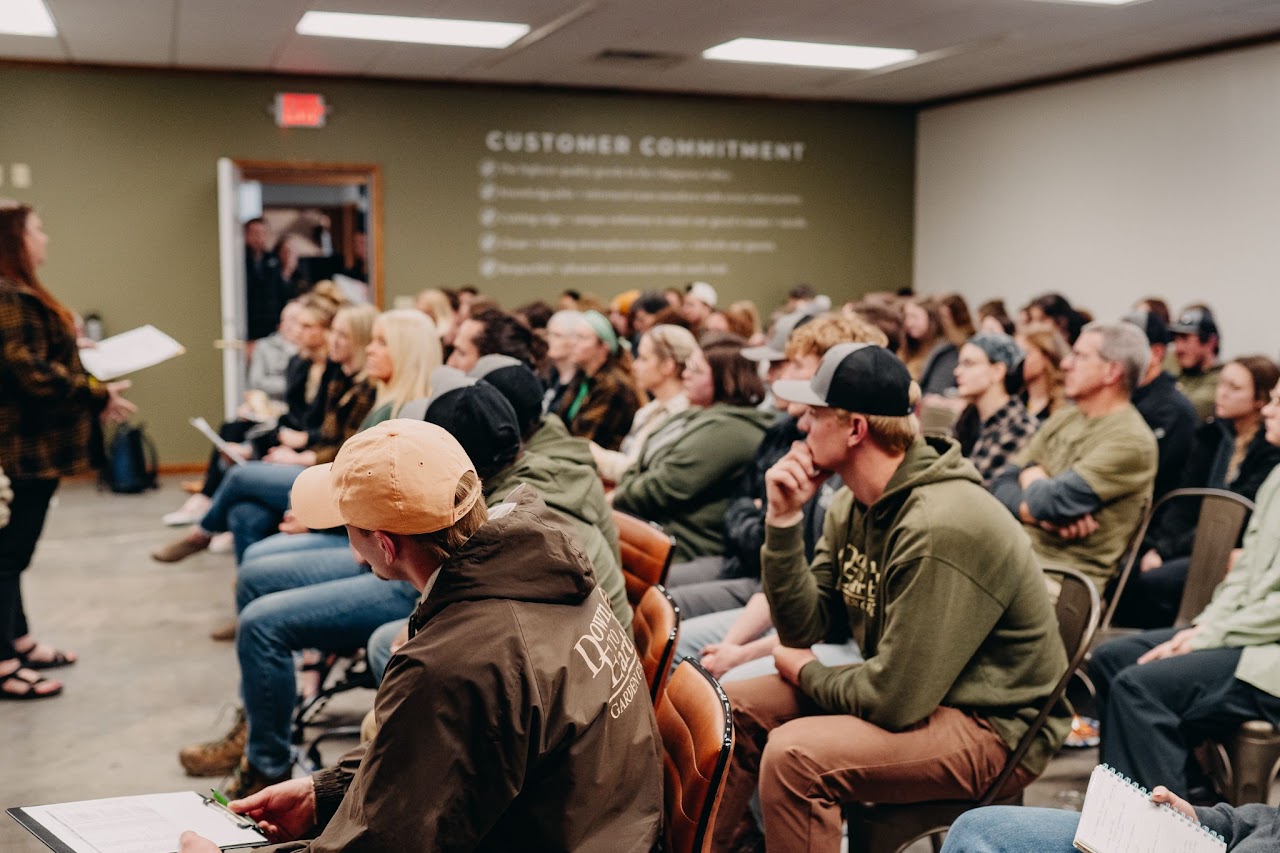
Here’s what that looks like at DTE:
- Daily huddles: Short touchpoints that set priorities, address questions and bring everyone into alignment.
- Bi-weekly supervisor meetings: A space for frontline leaders to share updates, challenges and insights.
- Bi-weekly manager meetings: A time for cross-department leaders to align, support one another and stay connected.
- Quarterly “dream team” meetings: A gathering of key team members focused on long-term goals and cultural development.
- Quarterly “Level II” leader meetings: A leadership development space for emerging and experienced leaders.
- Department meetings: Deep dives into operational details where teams strengthen their workflow and communication.
- Divisional meetings: Opportunities to connect across retail, landscape, greenhouse operations and boutique teams.
- Annual all-company team meeting: A celebration of purpose, progress and people, bringing the whole company together for vision-casting and unity.
This structure might look heavy on paper (or on your screen), but in practice, it brings consistency, accountability and clarity. It creates shared language, shared understanding and shared responsibility.
Examples of our culture in action
Our culture isn’t defined by policies or slogans. It's defined by what we do daily and by the innovations that emerge when we listen to our people. Here are a few of the initiatives that have shaped our trajectory:
1. Leveraging technology to build digital community
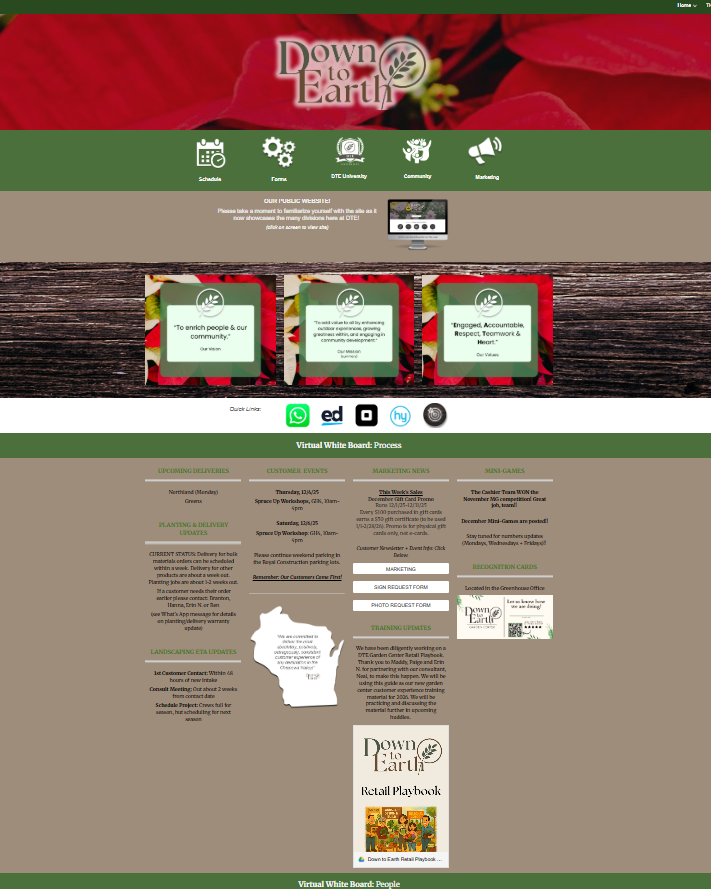
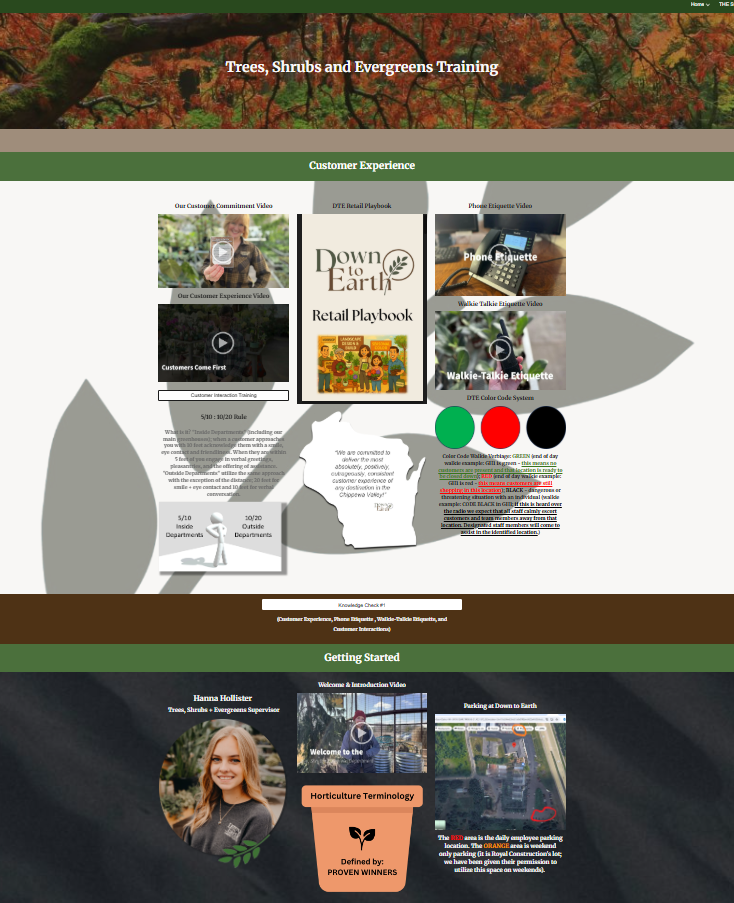
As our team expanded, communication became harder. People needed clarity, training and consistent updates. We responded by adopting digital tools that created a company-wide communication and training platform.
This shift allowed us to:
- Deliver on-demand learning
- Gather real-time feedback
- Share updates quickly
- Strengthen cross-department connection
- Amplify transparency and alignment.
Technology became a bridge, not a barrier, bringing our team closer and giving everyone access to the information they need to succeed.

2. Creating yard collections that educate, inspire & differentiate us
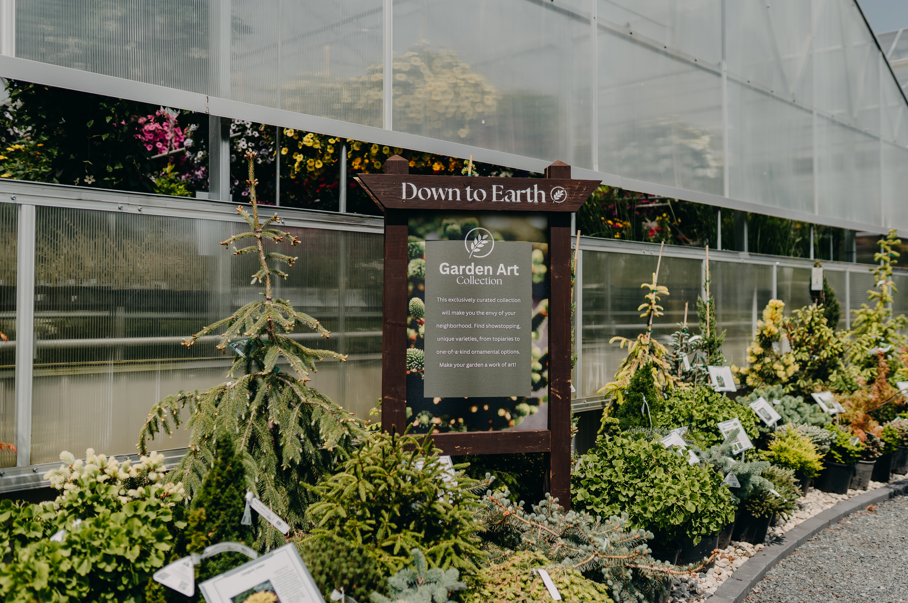
One of our proudest accomplishments has been the development of our yard collections: thoughtfully curated displays that highlight plant attributes and teach both team members and customers how to use them successfully.
These collections:
- Became a powerful hands-on training tool
- Boosted team product knowledge
- Simplified customer decision-making
- Elevated our retail shopping experience
- Improved sales through confidence and clarity.
Even our wholesale landscaping partners began bringing their clients to wander the yard collections because they offered a clear, visual way to make decisions.
3. Using employee engagement surveys to shape our growth
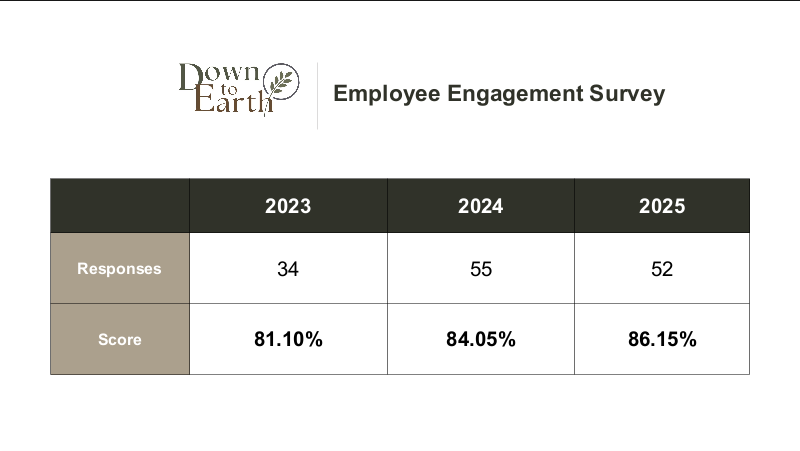
One of the most impactful practices we adopted has been our annual employee engagement survey. Conducted consistently, and compared “apples to apples” every year, these surveys provide an honest, unfiltered look at our culture, leadership, communication and opportunities for improvement.
We don’t collect this data for a report.
We collect it to listen, align and evolve.
Because of these surveys, we have:
- Improved communication processes
- Adjusted leadership training
- Strengthened accountability
- Identified blind spots
- Clarified expectations
- Built trust through follow-through.
This practice has shaped our culture more than almost any other initiative. It demonstrates our commitment to listening and acting and shows our team that their voice truly matters.
What unity looks like at Down to Earth
Unity doesn’t mean agreeing on everything. It means ensuring every person understands:
- Our goals
- Our expectations
- Our values
- Their role in moving us forward.
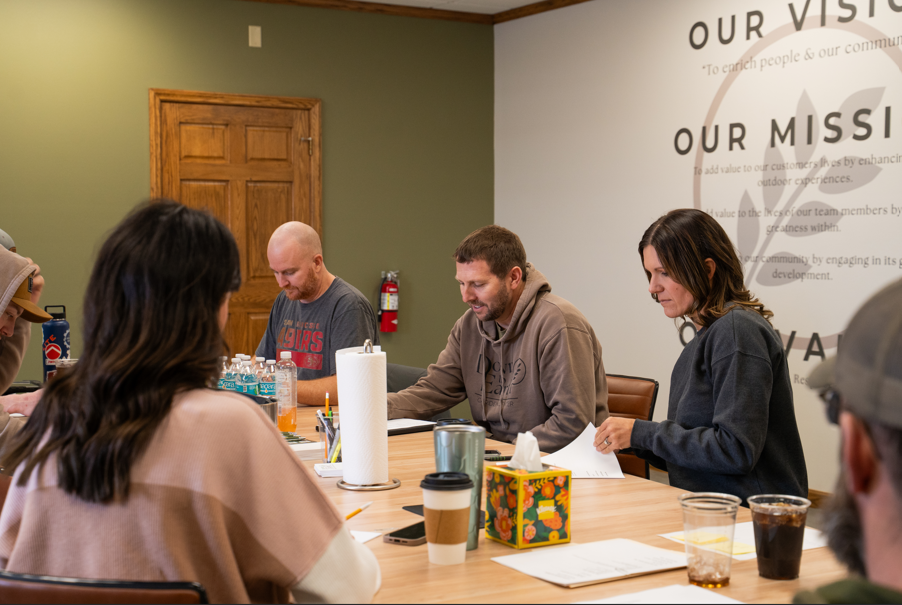
Unity shows up in daily choices:
- Choosing clarity over assumption
- Choosing collaboration over isolation
- Choosing accountability over avoidance
- Choosing growth over ego
- Choosing purpose over productivity alone.
When we do these things consistently, we build a team that not only works well together but grows together.
A culture that moves forward, together
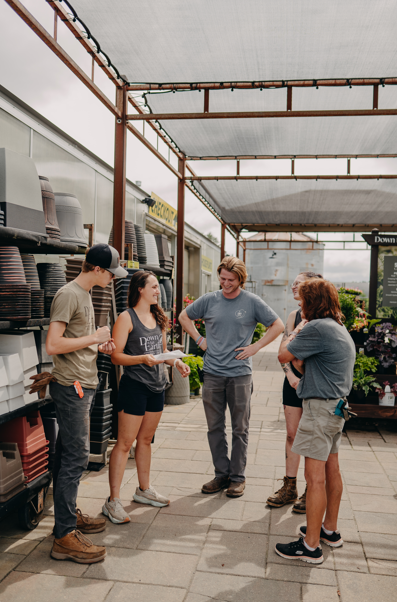
Our journey has taught us that great teams don’t emerge by accident. They grow through intention, structure, communication and shared ownership. They grow through leaders who listen, people who care and systems that support alignment.
Most importantly, they grow through the belief that slowing down to do things well is the fastest way to create sustainable momentum.
At Down to Earth, we are proud of the culture we’ve built, but we’re even more excited for the culture we continue to cultivate. With every meeting, every initiative, every training and every honest conversation, we are shaping a workplace where people feel connected, valued and empowered to do their best work.
We don’t just grow plants; we grow people, teams and possibilities.
And we grow best when we grow together.
Latest from Garden Center
- Art Van Wingerden appointed chair-elect of American Floral Endowment
- U.S. horticulture operations report $18.3 billion in sales: USDA
- Stonehouse Nursery announces ownership transition from founders to nursery manager
- From Structure to Storefront: The Retail Greenhouse Features Worth Planning For
- [WATCH] Taking root: The green industry’s guide to successful internships
- Green escapes: Garden Center Conference & Expo tours Kansas City IGCs
- BioWorks appoints Chris Rose interim general manager
- NCNLA announces 2025 industry award recipients