The grow-your-own customer group is one of the most dynamic and fastest-growing segments in today’s garden center and nursery industries.
Comprised primarily of millennials and families with children, this critical client group should not be overlooked, as they drive revenue resilience, higher basket size, greater customer loyalty and market diversification.
Erik Dietl-Friedli, a partner with Garden Center Consultants, says that the grow-your-own segment experienced a massive explosion in popularity at the start of the COVID-19 pandemic. Industry-wide, sales of herb and vegetable starts doubled, and sometimes even tripled, for retail garden centers and nurseries.
Industry statistics bear this observation out. According to the National Gardening Association, the percentage of US households participating in food gardening increased from 35.4% in 2018 to 41.3% in 2021, with a spike to 41.7% in 2020.
A survey about home gardening conducted by ScottsMiracle-Gro found that 36% more Americans grew vegetable gardens in 2020 as compared to 2019. Sixty-five percent of these new growers reported they decided to plant a vegetable garden specifically because of the pandemic.
Curiously, this interest among home gardeners persisted even after pandemic fears subsided.
“People discovered that growing their own food was fun, and it was an engaging activity,” says Dietl-Friedli, who’s spent two decades as a merchandise manager and head buyer for Flamingo Road Nursery in Davie, Florida. “The pandemic sparked an enduring interest in edible gardening that customers continue to pursue, and the fundamental desire to grow remains strong among clients.”
In light of the ongoing popularity, industry experts share their keys for successfully tapping into this enduring market and strengthening the relationships with their edible gardeners.
Garden centers need to know their customers
To capitalize on this sustained enthusiasm for home-grown fruits, veggies and herbs, Dietl-Friedli suggests retail garden centers and nurseries analyze the ethnic makeup of the local community they serve.

in Florida for two decades.
“Local demographics are a primary driver of demand for specific plant varieties,” he explains. “In South Florida, we have a significant Latin community, and that demographic creates a substantial interest in a palette of plants relevant to that community’s cultural heritage.”
To illustrate this point, Dietl-Friedli highlights the sale of mango trees. When assisting a customer interested in purchasing a mango tree, he first determines their country of origin, as this will reveal the specific varieties they are likely seeking. For example, he says if a customer is Jamaican, he will direct them to ‘Julie’ mango varieties. If they are of Indian or Sri Lankan descent, he’ll point out the ‘Alphonso’ mangos.
"It’s funny how each variety and type of plant really speaks to an ethnic group," Dietl-Friedli says.
Dietl-Friedli recommends owners and sales managers invest time in learning about the various ethnic groups in their service area and the specific plants each group favors. This simple research and personalized interaction can quickly build a deeper, lasting relationship with customers.
Garden center employees need to talk the talk
A knowledgeable staff is also a requirement. Megan McMullen, education and training manager at Homestead Gardens, which has three locations in Maryland and Delaware, says store associates are the primary educators. They are best positioned to be the front line of customer interaction due to their intimate knowledge of the products, their ability to speak from personal experience with the plants they sell and their familiarity with customer needs.
“This (concept) translates for us, and we’ve really seen it working,” she says. “We’re seeing an increase in our sales, both with vegetables and with herbs, pretty significantly across all of our stores.”

Additionally, garden centers and nurseries must recognize that their customers often conduct their own research, often by initially gathering gardening information from social media platforms such as YouTube and TikTok.
Since this information frequently circulates in nontraditional gardening communities, Dietl-Friedli warns that this new media landscape introduces gardening concepts and terminology that significantly differs from the language retailers traditionally use.
Dietl-Friedli recalls overhearing the term “chop and drop” being used between an employee and a customer. He later asked the employee to explain and learned the phrase was derived from permaculture, where a fast-growing plant, regardless of its ornamental value, is deliberately cut down and left on the ground to decompose naturally, which enriches the soil and feeds surrounding plants.
“About a week later, a younger customer used the term naturally in conversation, and I knew it was a term I needed to start including in my conversations with customers,” he says. “When you do that, (customers) recognize you know what’s going on and not trying to give them advice from 1975.”
Ultimately, success hinges on actively listening to customers to stay current with popular terminology, Dietl-Friedli says. This practice reinforces the perception of a professional who is knowledgeable and contemporary, not dated.
Keep garden center customers coming back
A critical area where retail garden centers and nurseries can strengthen customer relationships with their grow-your-own customers is in post-purchase engagement, a facet Dietl-Friedli believes the industry often neglects.
Continuing education is a prime way to build post-purchase relationships. According to Dietl-Friedli, these educational events should be highly pertinent to customers' current gardening pursuits and not overly broad in nature.
“While subjects like ‘organic gardening’ remain popular, customers tend to be increasingly savvy, and they are seeking more detailed knowledge,” he says.
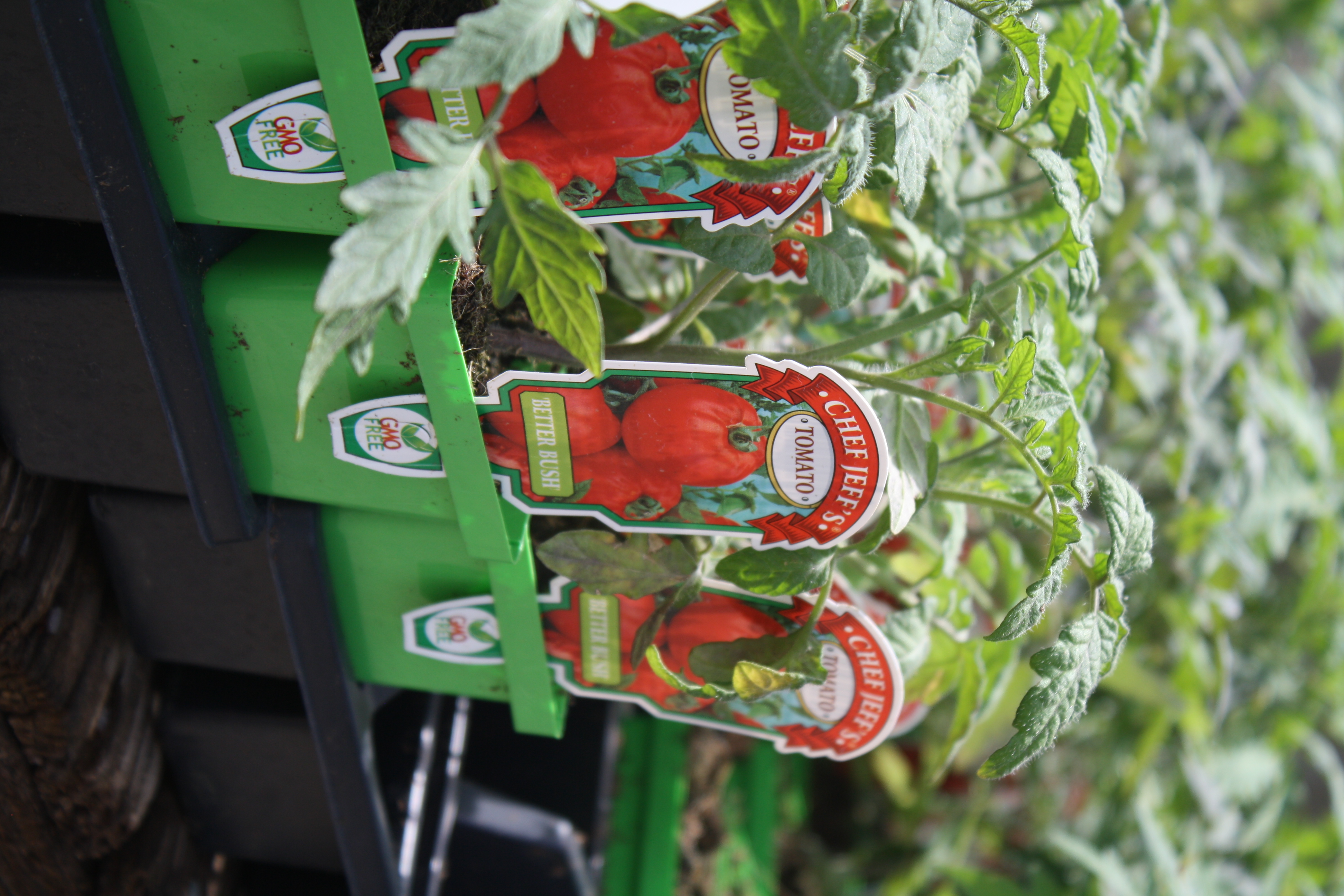
That means garden centers should focus on topics that appeal and will attract intermediate and advanced gardeners: those who already understand the basic terminology and are eager to master the broader concept beyond the beginner’s stage, Dietel-Friedli says.
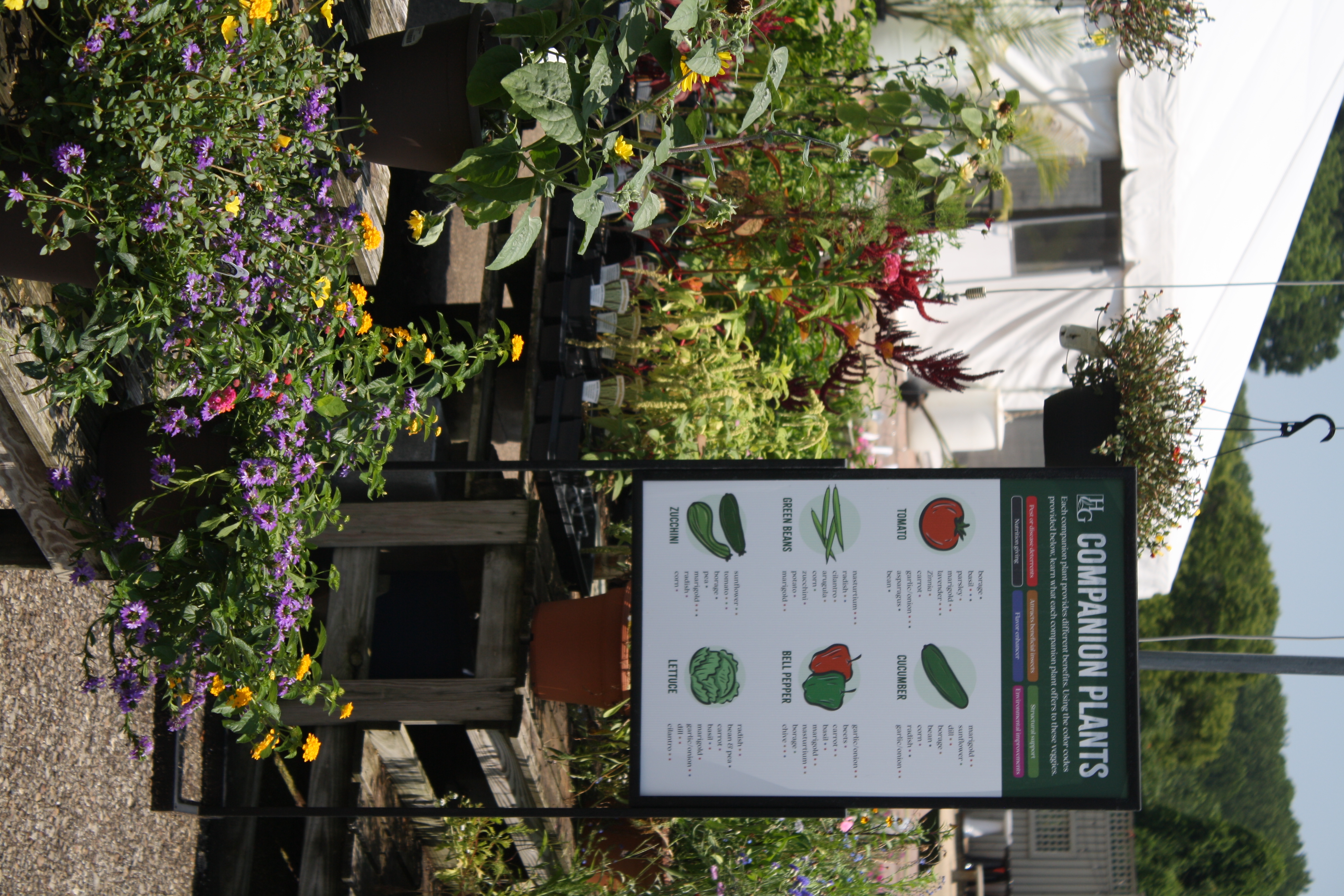
According to McMullen, the key to connecting with the grow-your-own gardener and capitalizing on the burgeoning edible gardening trend is comprehensive education. While Homestead Gardens provides its customers with the necessary products, robust signage and educational emails, McMullen emphasizes that the IGC’s most effective strategy is in-store education.
At Homestead, this includes hands-on instruction featuring a mix of visiting experts and hands-on make-and-take workshops that cover cultivation techniques for various fruits, vegetables and herbs.
“People really are interested in learning about all the different uses of herbs or how to prune your fruit trees to be able to increase yields,” McMullen says. “There are lots of ways to provide in-store education, but I believe the most effective way that we work with our customers is to make sure that they know what to do with these plants when they take them home and make sure that they're successful.”
According to McMullen, Homestead Gardens has achieved success by casting a wide net, accessing a full range of expertise from various backgrounds, including commercial, academic, governmental and volunteer sectors, to provide customers with content that is interesting, exciting and accessible.
Additionally, Dietl-Friedli emphasizes the importance of creating an informal and non-judgmental environment for all educational events. By starting talks with an open invitation for questions, participants are encouraged to ask rudimentary questions, thereby putting the entire audience at ease and ensuring a more productive and engaging discussion.
By selecting these niche sophisticated topics and moving away from only broad introductory subjects, garden centers and nurseries can effectively build deeper relationships and establish themselves as ongoing partners in their clients' gardening success.
Use your vendors’ expertise
Working with vendors is a straightforward and effective way for retail garden centers and nurseries to enhance the education of both "grow-your-own" customers and staff. Both Dietl-Friedli and McMullen agree that vendors are inherently motivated to participate because an educated customer or employee ultimately translates to increased product sales for them.
“Vendors and distributors nearly always offer to provide training, typically focusing on educating the retailer's staff and talking with customers about specialized products,” Dietl-Friedli says.
He also recommends leveraging vendor expertise by hosting focused informal educational sessions for customers. He advises against broad presentations, preferring to keep vendor discussions highly focused and specific to a single area of expertise, which effectively builds greater credibility for the retailer.
Don’t just talk — listen
According to McMullen, assessing customer needs is a fluid, collaborative process that begins by listening to retail associates. The associates, acting as the frontline connection, report back on the specific questions, confusions and concerns they hear that provide unique feedback on the grow-your-own gardener’s mindset.
“That's always really useful information for us, because our store associates not only help the customer be successful, but also they can share those areas of confusion or places where people make missteps, which makes its way back to our education and our marketing department,” she says, citing a recent customer feedback on ideal soil mixes for growing vegetables. “We take a very collaborative approach, and we're always talking about what the customer's experience is. That really helps us shape our education and our marketing as well.”
While Homestead Gardens avoids dictating a rigid list of talking points to its retail associates, the education department is also highly responsive to staff needs, McMullen says. If associates express a desire for more knowledge in a specific topic, the company provides the necessary internal training.
“We try to service both sides, making sure that our store associates feel educated to answer questions and learn more about things that they don't know about,” she adds. “And whenever we provide education to our store associates about a particular product line or a particular (gardening topic), we absolutely always see the associated sales afterward because people understand what it is that they're helping their customers with, and they know how to recommend its use.”
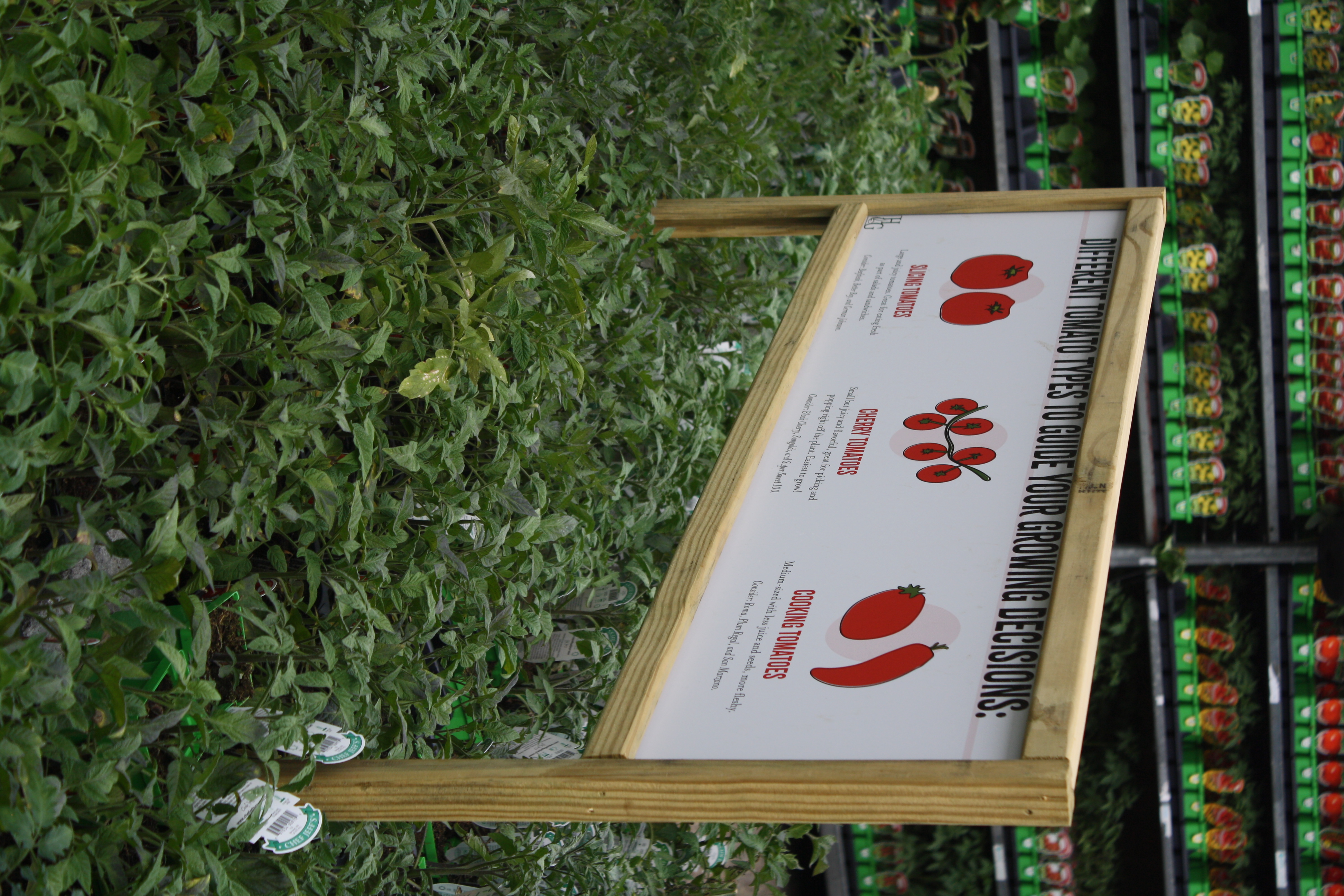
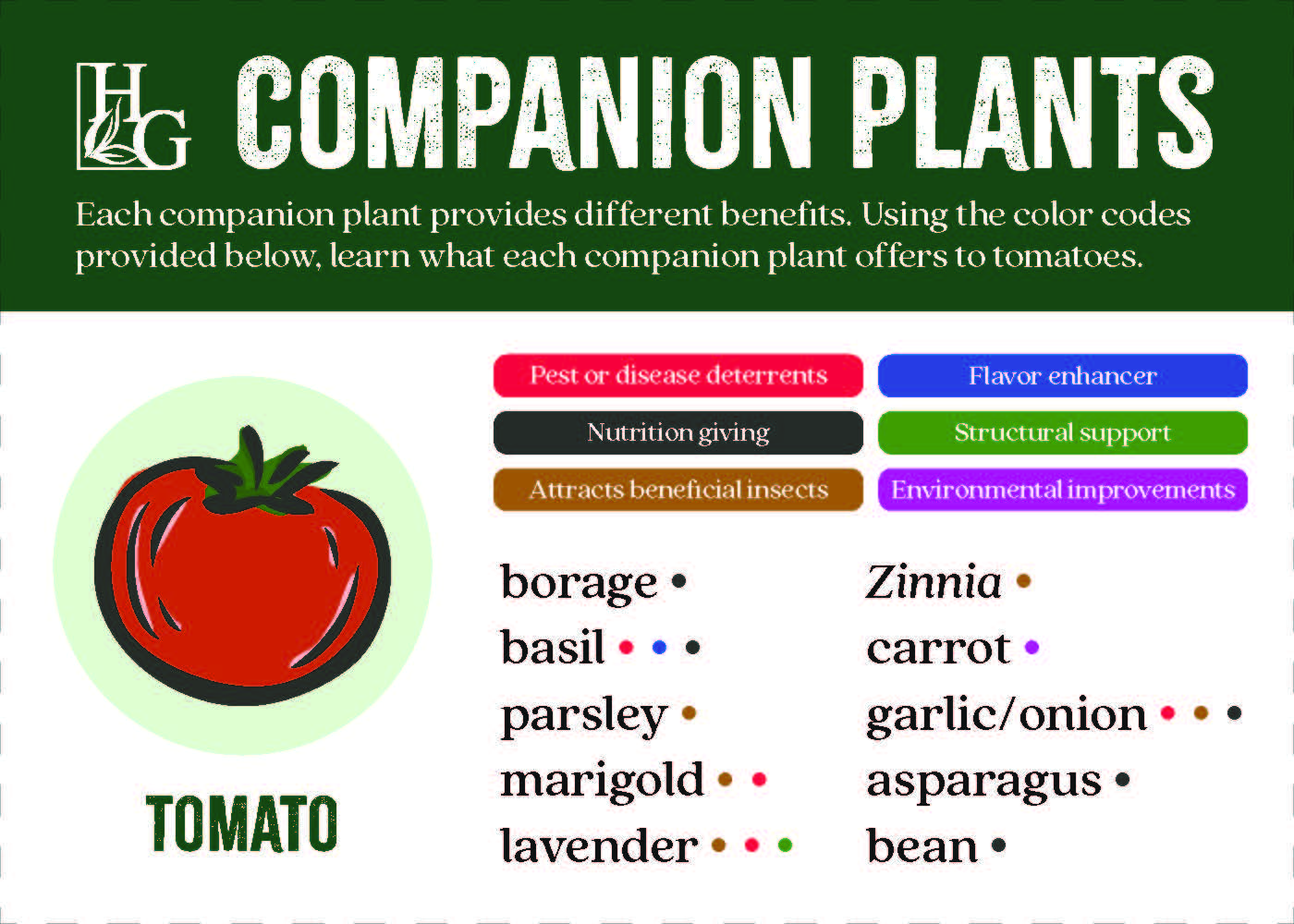
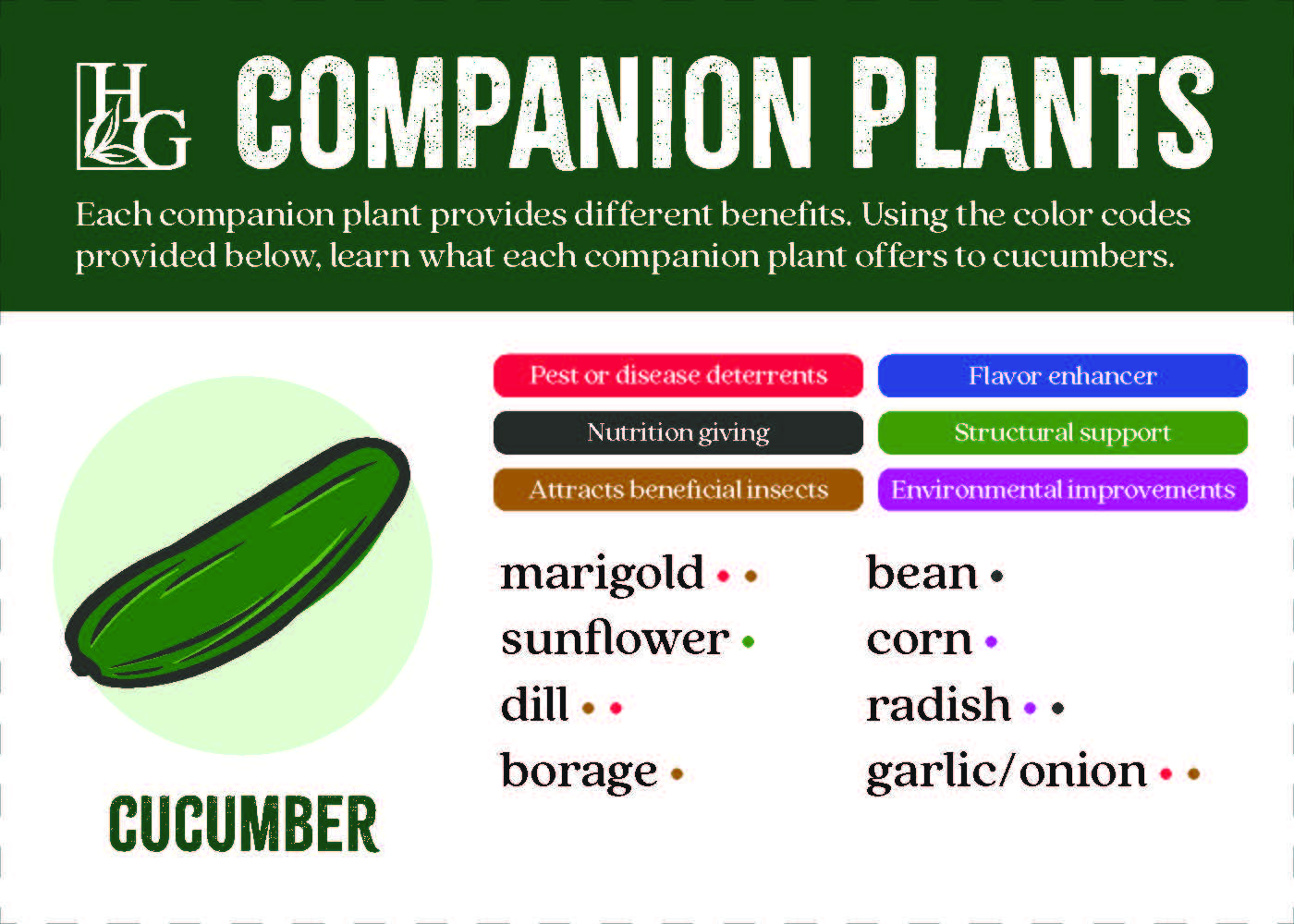
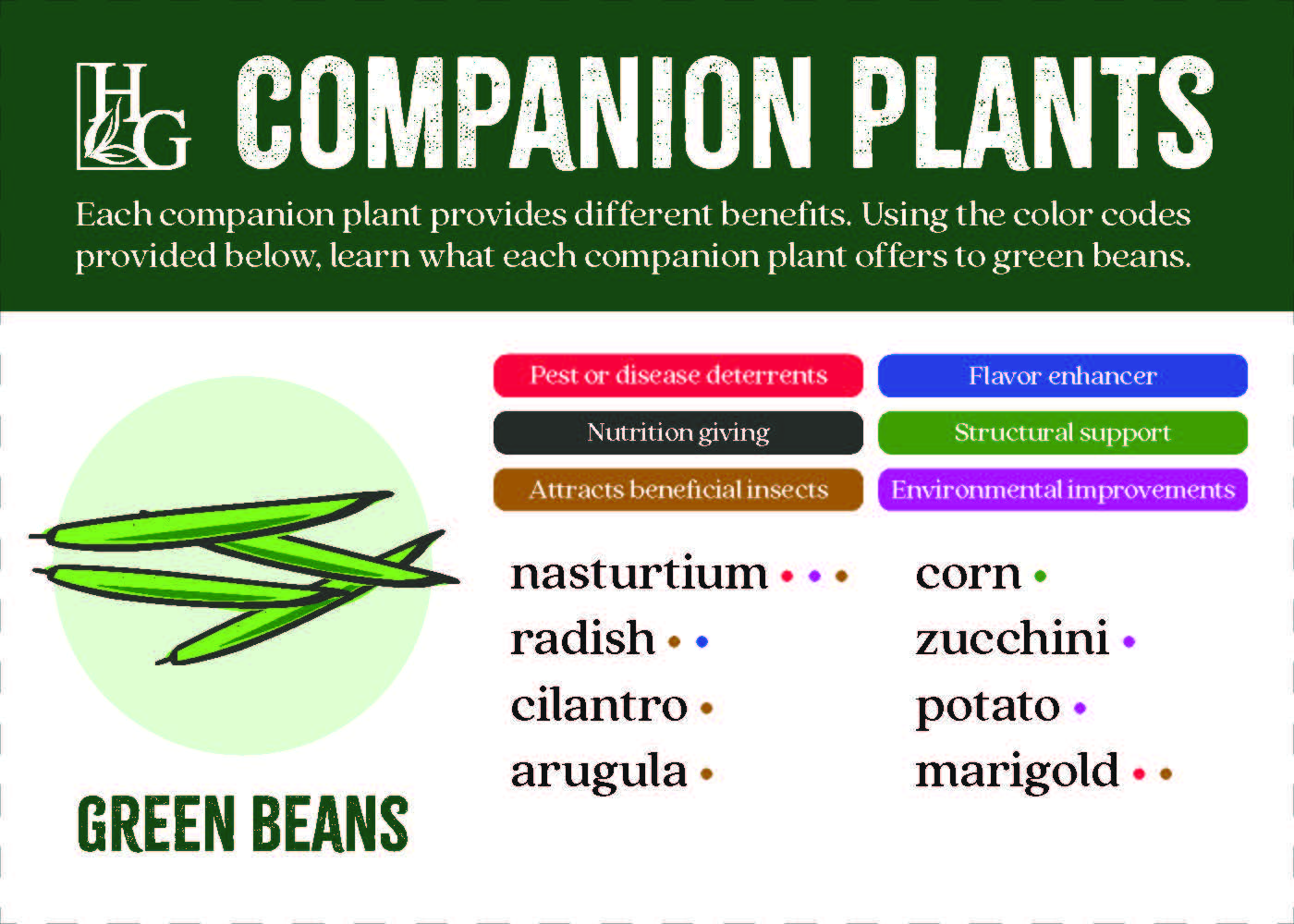
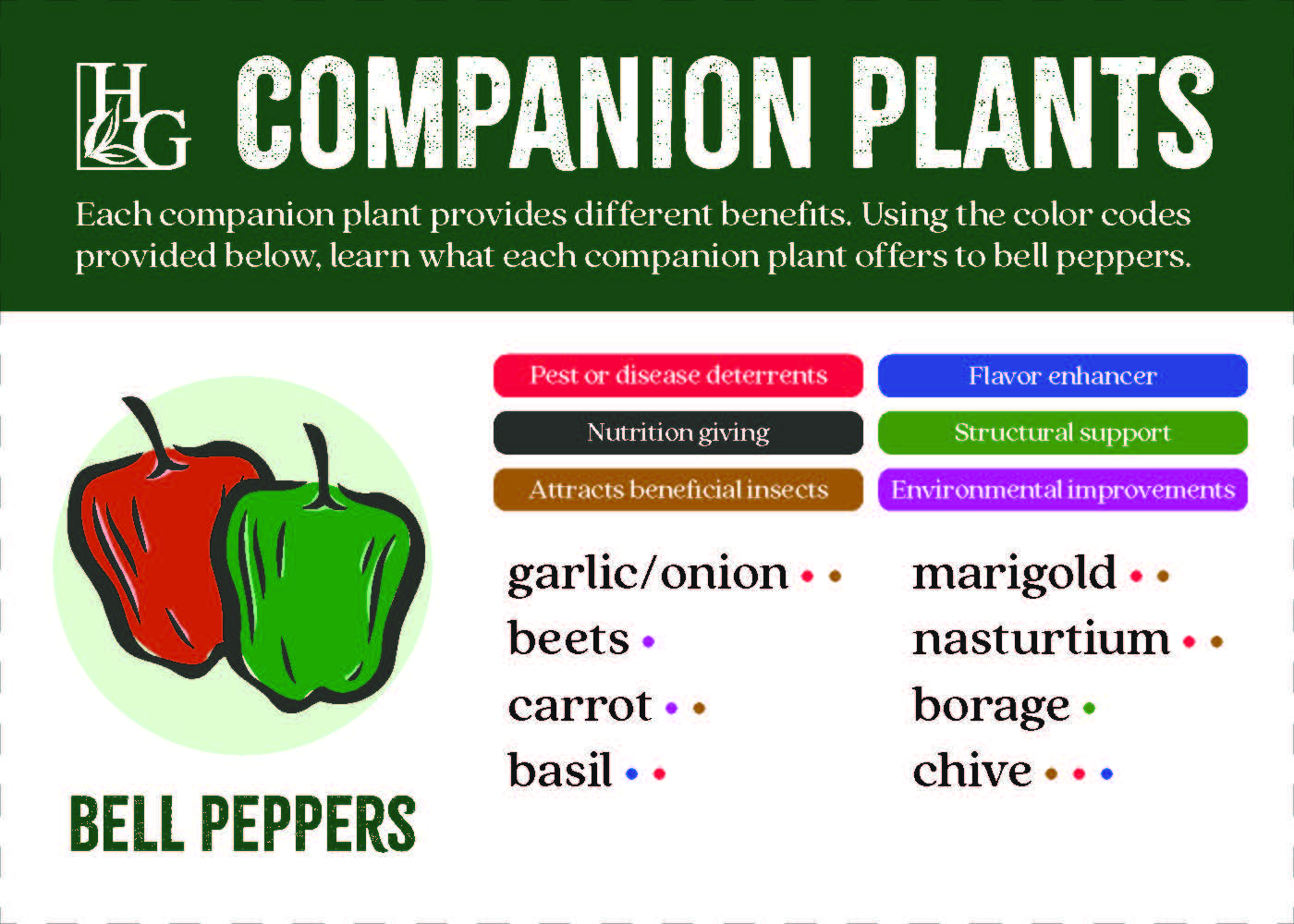
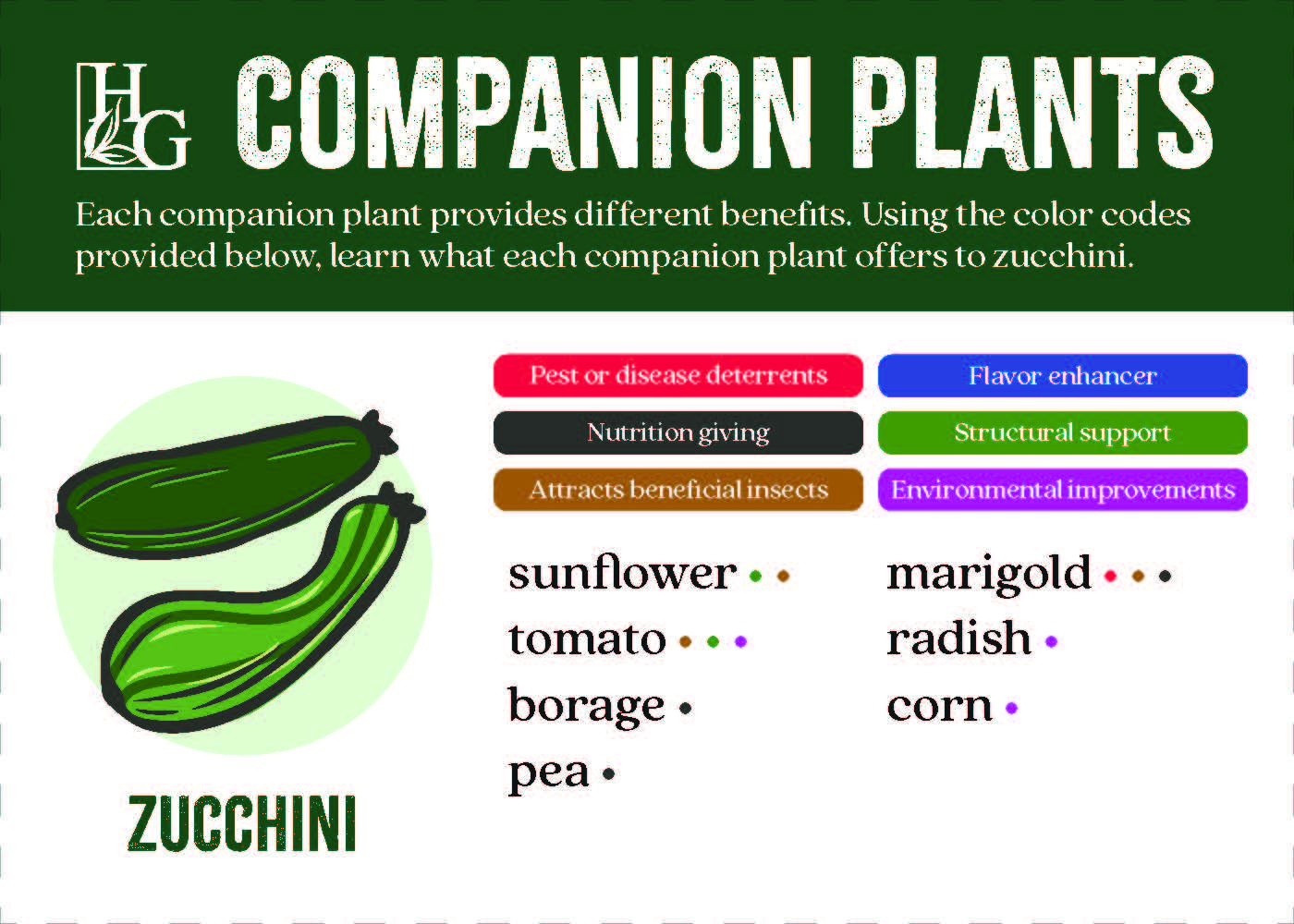
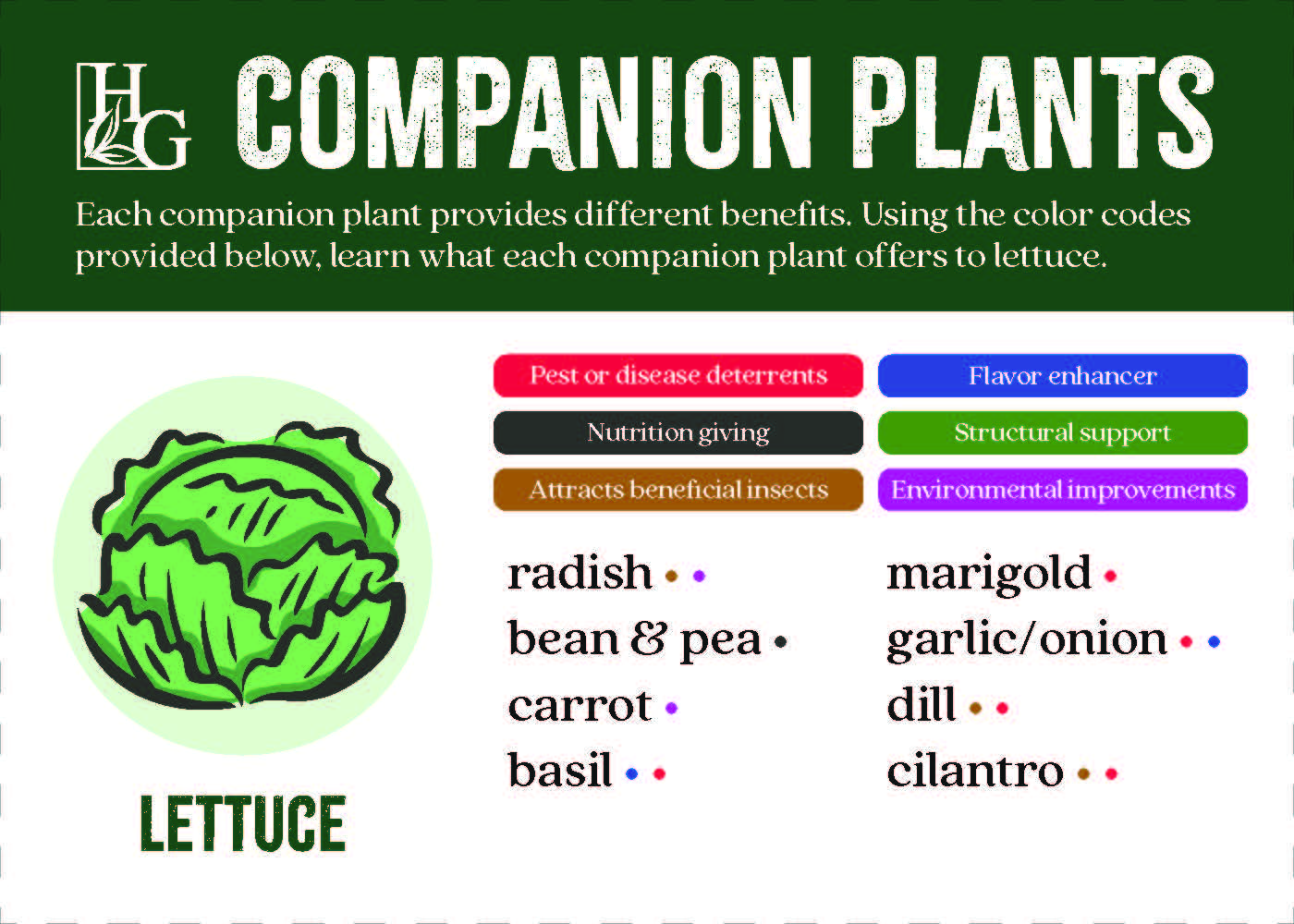
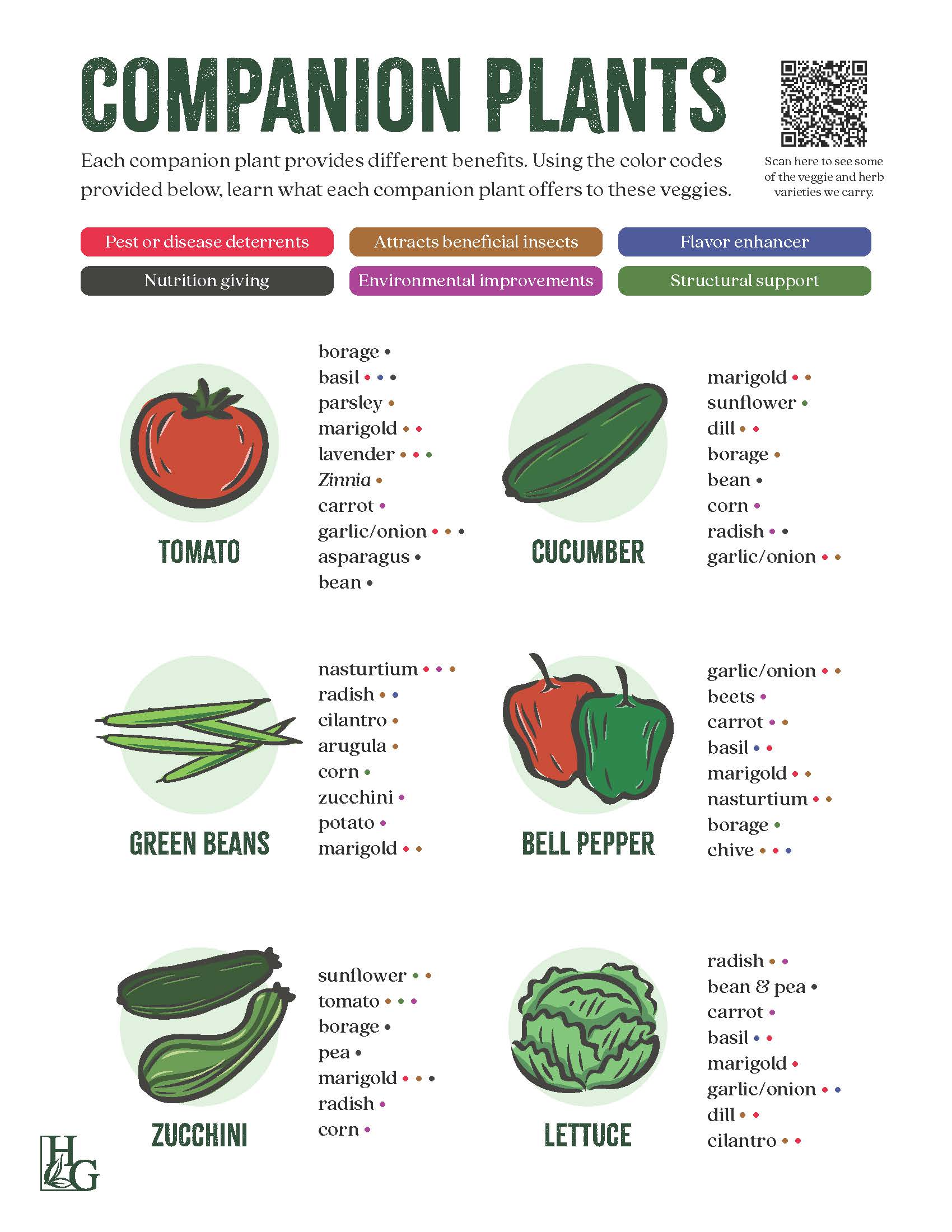
Scroll down for examples of the companion planting cards Homestead Gardens uses for vegetables. All cards are used courtesy of Homestead Gardens:
Mike Zawacki is a Cleveland-based journalist and frequent contributor to the GIE Media Horticulture Group who has covered various aspects of the green, horticultural, sports turf and irrigation industries for the last 20 years.
Latest from Garden Center
- Seed Your Future releases internship data for horticulture employers
- National Garden Bureau, All-America Selections recognize pepper breeder Terry Berke, Territorial Seed Company President Tom Johns
- Cool tech for garden retailers
- The Growth Industry podcast Episode 10: State of the Horticulture Industry
- The inventive women of TPIE ’26
- 10 questions with Jonah Nelson
- Quality Horticulture to acquire Hydrofarm Canada distribution
- From Structure to Storefront: The Retail Greenhouse Features Worth Planning For