Second-generation garden center owners each have a different story of how they took over their family business.
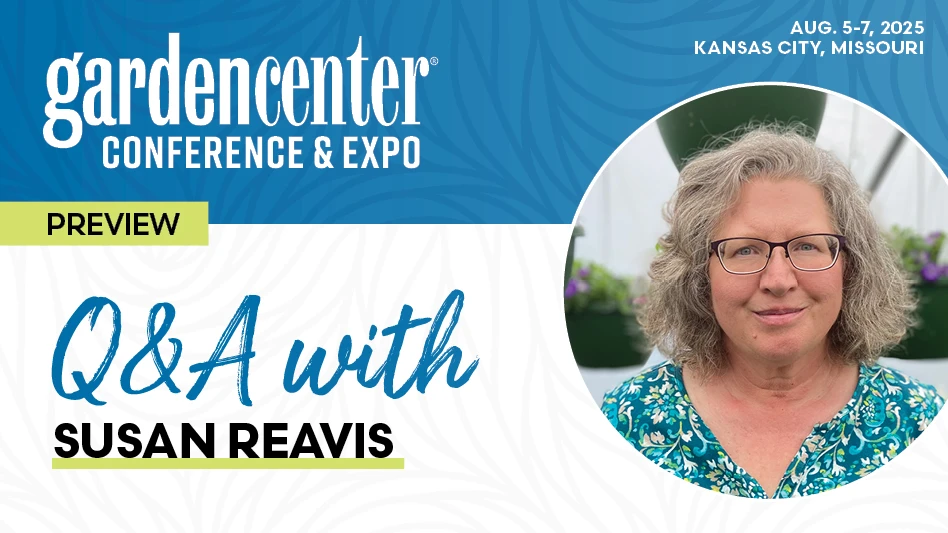
Susan Reavis — the former owner, consultant and board of directors treasurer at Reems Creek Nursery outside Asheville, North Carolina — says instead of winging it, creating a thought-out succession plan with your family is key to not only ensuring that your business is in good hands, but that your relationships stay intact, too.
Reavis knows because she learned this lesson the hard way.
In this Q&A, Reavis shares her family’s succession story, which she said was not ideal, and what she would have done differently.
Editor’s note: Susan Reavis will speak at the 2025 Garden Center Conference & Expo from 1:30 to 2:30 p.m. Wednesday, Aug. 6 during the session, “Lessons from a Decade-Long Journey of Succession Planning, a Sale Leaseback and Relocation.” Alongside Chris Cimaglio, managing partner at BEST Human Capital & Advisory Group and PivotPoint Business Solutions, and her son-in-law David Williams, vice president of operations & co-owner at Reems Creek Nursery, she will discuss succession plans and how to make yours work for your business. Visit gardencenterconference.com for more information and to register.
Lauren Cohen: Tell me a bit about your career and what you’re doing currently.
Susan Reavis: My parents started the nursery in the front yard of our family home, and that was around 1980, so I was in grade school. I learned a lot about the business side of things while I was in high school. I went on to get a two-year degree in accounting, so I did a lot of the bookkeeping early on. So, being in a family business definitely helped me have hands-on experience.
We had a retail garden center, and we also had a landscaping department. I learned a whole lot from observing others do their jobs. Over the years, as my parents transitioned to doing less and less, I transitioned to having more and more responsibility in the business.
One of the things we did was start a separate location for growing plants. I enjoy that a lot, and that’s what I’m doing now — strictly growing. So, we built greenhouses, and we started this production aspect of our business.
LC: What is the subject of your upcoming conference session, and what led to you deciding on discussing this topic?
SR: Family business is very unique, and a lot of (horticulture businesses) are family-owned businesses. In our family’s experience, the succession plan was not very formal, and my parents did not see the need to make a formal succession plan. It was left up largely to my brother and I to see to the future.
What I want to convey is to be brutally honest about our experience, which was not textbook; it wasn’t the ideal situation. I think my parents always had the idea that the business would take care of them, but they didn’t make a plan for that, and I felt like it was left up to me to make that plan.
LC: Who do you think will benefit most from coming to your session?
SR: Second-generation family businesspeople. A lot of times, the first generation, the entrepreneur who stuck their neck out and started the business, doesn’t know how to let it go. And so, the second generation a lot of times is left with making a plan and being patient — biding their time.
LC: What should attendees expect from your session?
SR: I think just an honest discussion. There are happy times, and there are sad times, you know, less-than-ideal relationships. I think what we can get excited about is that the succession planning transition can happen without ruining relationships. I think there’s a lot of fear that a relationship might not survive.
LC: What key takeaways do you want attendees to leave with after participating in your session and discussion?
SR: I want them to leave with the spark to create their own succession plan. It doesn’t have to be formal, necessarily, but start those conversations. That idea to give people a plan to avoid a tragedy — avoid the business falling apart — is something that I would be interested in people learning.
LC: What keeps your passion for horticulture going in the industry today?
SR: I really enjoy seeing plants grow from very small, little plugs or even seeds up into customers being happy to buy them and put them in their cars and take them home. I like seeing people be happy with plants; I like seeing the growing process.
This year, we grew a whole lot more vegetable starts from seeds, so I sowed hundreds and hundreds — thousands — of vegetable seeds this spring, and to see those germinate and grow into a healthy little start that I know people can take and grow their own food is very rewarding.
LC: What are you looking forward to most about the conference in general?
SR: I enjoy the thought of being with other garden center owners and other growers, because there’s a whole lot of unique things that happen in the garden center industry, and being with people who understand those issues is refreshing.
Editor’s Note: This interview has been lightly edited for style, length and clarity.
Lauren Cohen is an editorial intern with the GIE Media Horticulture Group.
Latest from Garden Center
- Cool tech for garden retailers
- 10 questions with Jonah Nelson
- Quality Horticulture to acquire Hydrofarm Canada distribution
- From Structure to Storefront: The Retail Greenhouse Features Worth Planning For
- Growing flowers to grow confidence
- Think like Disney
- Blue Grass Farms acquires Brehob Nursery
- The inventive women of TPIE ’26