
Exotic foliage plants have been all the rage for the past few years. Tucked away in the labyrinth of orders, families and genera of kingdom Plantae are the jewel orchids.
Jewel orchids are terrestrial rather than epiphytic, meaning they grow in soil rather than clinging to tree branches and rocks. Most, but not all, species are tropical, living in their moist, shaded niche under the forest canopy.
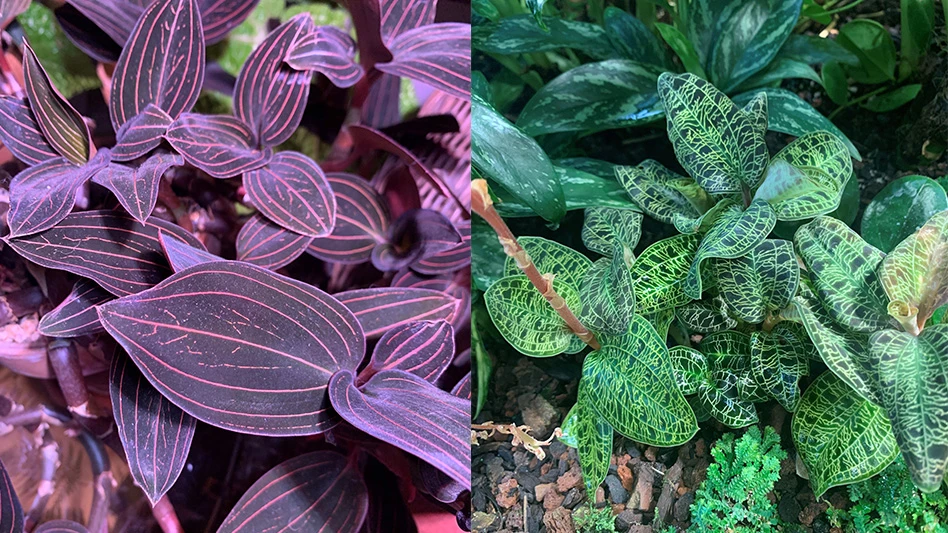
My focus here will be on two genera, Ludisia and Macodes. Both are from tropical forests of southeast Asia, and each is adorned with lavish pinstripes or opulent lightning bolt variegation that has given rise to the common name “jewel orchid.”
Ludisia discolor, like other jewel orchids, is grown for its beautiful striped foliage rather than its flowers, which appear in winter and are dainty and white (and nothing to write home about in my opinion). Leaf color varies from deep green to a brownish red, and the leaves are velvety to the touch.
Regardless of the leaf color, the white to pink pinstriped variegation really makes Ludisia a “sharp dressed flower” and helped it receive the Award of Garden Merit from the Royal Horticultural Society.

Ludisia is easy to grow as a houseplant if you provide the right conditions for it. It needs a well-drained soil mix that’s rich in organic matter. The mix can also include coarse bark and sphagnum moss to improve aeration for the roots.
Like most plants, do not overwater Ludisia, or you’ll start the vicious cycle of root rot. It prefers medium light, good air circulation and to be kept out of direct sunlight. It likes high humidity and will do well in a terrarium.
Macodes petola, or lightning jewel orchid, is my personal favorite. The leaves of M. petola are dark green with glowing golden yellow stripes. All the cultural information above about Ludisia also applies to growing Macodes. Both are quite easy to propagate vegetatively, though the crops at Little Prince are from liners purchased from Casa Flora.
They are easy to grow in a nursery situation only if they are not overwatered and in a greenhouse with 70-80% shade and night temperatures in the low 70s. We have heated floors where the jewel orchids are grown, which works well.
There are other genera of jewel orchids to consider as well. All will require similar growing conditions to those described here. I highly recommend these wonderful plants as true jewels in the world of flora exotica.
Explore the September 2023 Issue
Check out more from this issue and find your next story to read.
Latest from Garden Center
- Emerald Coast Growers celebrates 35 years in business
- Zach Galifianakis is hosting a Netflix show about gardening
- Society of American Florists seeks nominations for floral industry awards; deadline April 1
- Pioneering progress
- Seed Your Future releases internship data for horticulture employers
- National Garden Bureau, All-America Selections recognize pepper breeder Terry Berke, Territorial Seed Company President Tom Johns
- Cool tech for garden retailers
- The Growth Industry podcast Episode 10: State of the Horticulture Industry