Photos © Brian Hutson / Elevated Content
Editor's Note: This article originally appeared in the July 2025 print edition of Garden Center under the headline “Cultivated creativity.”
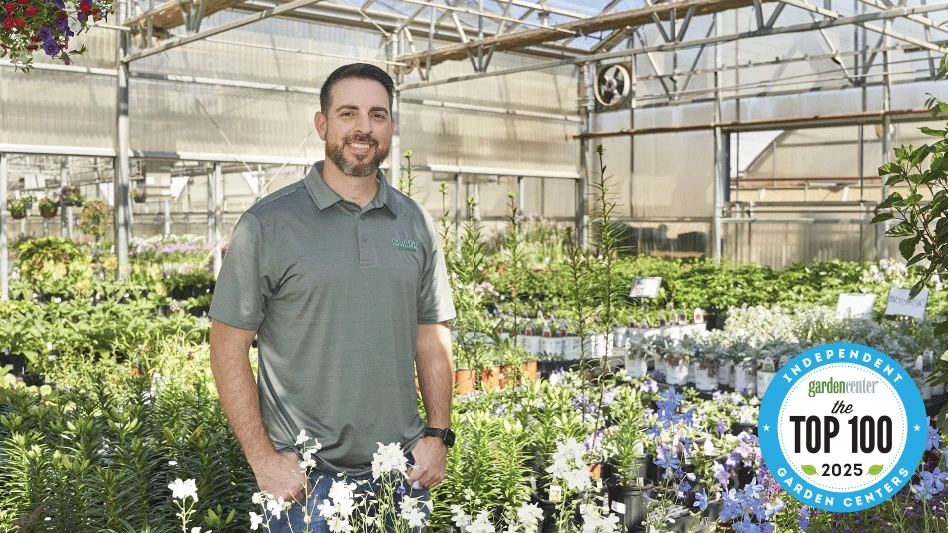
Michael Fiore’s admiration for his family’s legacy and his ardent connection to the garden consumer help preserve the 76-year history of Smith’s Gardentown, a Texas-based independent grower-retailer and No. 90 on Garden Center magazine’s 2025 Top 100 Independent Garden Centers List.
As the fourth-generation owner, Fiore ensures the viability of the business his great-grandfather C.O. Smith founded in 1949, his grandfather modernized and his mother and uncle grew and maintained. They provided a bedrock on which he’s building a fresh and innovative business.
Fiore and his brother, who is a minority owner and not part of the daily operations, purchased the business from their mom in 2024. Fiore’s challenges and opportunities differ from the previous generations, such as offering company benefits and providing a work-life balance.
“Something that is a newer concept than when my mom and uncles ran the business is that a lot of the younger employees want a purpose. They want a vision, and they want flexibility. Being able to take time off when they want to take time off, that was unheard of for the previous generation. As an employer, you have to figure out where you can be flexible and where you have to say, ‘No, it’s April and we’re locking in right now.’ You’ve got to find that balance.”
Fiore is grateful for how hard the previous generations worked to build a company “with such an outstanding reputation.”
“We’re always expanding in some way, but we’re always building off the great foundation the previous generation established,” he says.
Curtis Smith, Fiore’s grandfather, was a pioneer in the garden retail industry and helped modernize the garden center experience, Fiore explains.
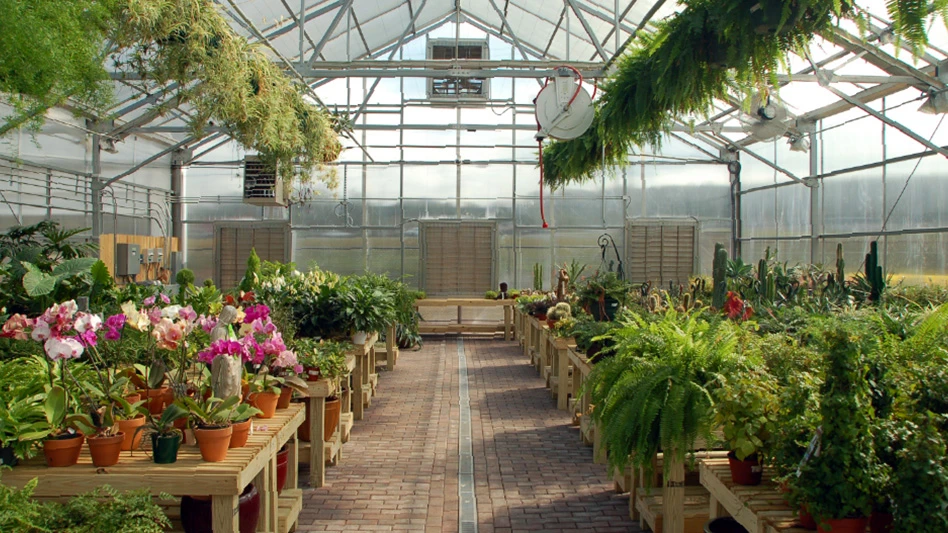
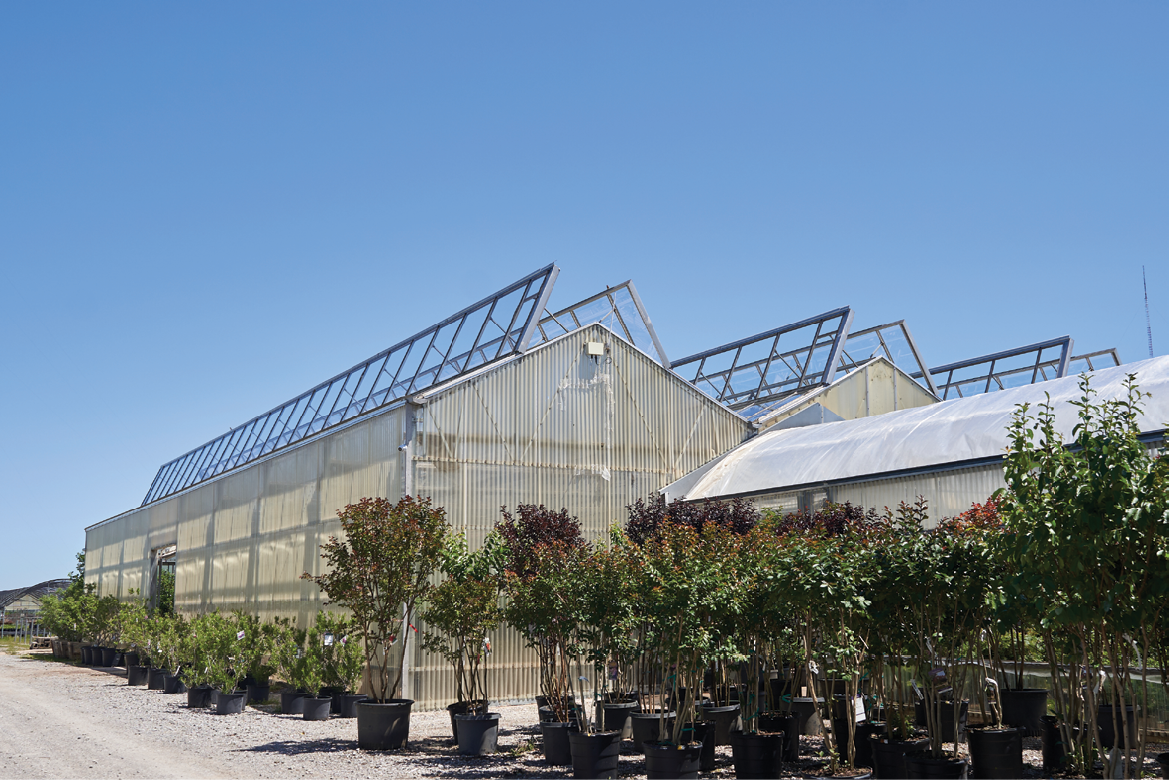
“My grandfather was responsible for really growing our business and revolutionizing the design of garden centers. In the ’60s and ’70s, most retail nurseries were just gravel and mud with the plants sitting on the ground,” Fiore says. “He was one of the first to acknowledge, ‘Hey, there are ladies coming in after church with their high heels on. They can’t be walking around in the mud to shop. Why not put down concrete pathways and raise the plants up on benches?’ That’s the industry standard now, but that was revolutionary thinking back then.”
The day the rain came
Smith’s Gardentown enjoyed decades of success thanks to the dedication of the family ownership and the community connections they built. But a multiyear devastating drought almost prevented that fourth-generation succession — until something no short of “a miracle” happened, Fiore says.
Fiore says he “ran away” from the family business, chuckling at the way plans don’t always work out.
“Between me, my brothers and all my cousins, we worked in the family business growing up, but we all had other plans for our own careers. For a while, it looked like there wasn’t going to be a fourth-generation owner because everybody left,” he recalls.
Fiore was away from Smith’s for a decade, during which time he studied wildlife and fisheries at Texas A&M University and moved out of the country to pursue a career — first to Costa Rica, then Peru, where he met his future wife. Love kept him in Peru, where the couple welcomed their first child.
“I had no plans of coming back to the U.S. Our life was in Peru. In 2011, my grandfather — the patriarch of the family — died and, coincidentally, the Texas drought began,” he says. “Here I was, living in the rainforest, thinking we’d never leave. But I’d call my mom, and it was dire straits for the business. As the drought progressed into 2013, we had such a steep decline in revenue — like 80% of the business — and we had to lay off most of our employees.”
But Fiore’s mom, Katherine, and one of his uncles, Steve, pressed on.
“In 2015, Wichita Falls was in stage-four drought restrictions — the strictest level you can have. No one was allowed to water outside at all unless it was recaptured gray water, basically. We were told that even if we start getting our average rainfall, it’s going to take 20 years to refill our reservoirs. People were trying to figure out how to get out of Wichita Falls because we were out of water. And my family decided if things didn’t change that spring, they had to close the doors forever,” he says.
Coincidentally, Fiore’s job in Peru suddenly ended. It was a development he didn’t see coming.
They were living in Peru with a 10-month-old baby, and Fiore was unemployed.
“My wife and I were asking ourselves, ‘What do we do? Do we stay in Peru? Do we go back to the U.S.? What will we do there since we’re about to lose the family business?’ So, we sat down and prayed for guidance. And the next day, it started raining in Wichita Falls. And it kept raining. It rained so much that May of 2015 was the wettest month on record for the entire state of Texas. It filled the lakes to capacity within a couple of weeks instead of 20 years.”
Everyone in town had lost their landscapes during the drought. Trees, plants, turf — everything — was lost, since watering was completely prohibited.
“Suddenly, the restrictions were lifted, and everyone needed to replace their landscapes. I called my mom, and she said they didn’t have the staff to handle all the business coming in. She asked me, ‘How soon can you get here?’ We got on a plane and moved back to the states in June 2015 and just hit the ground running. It all felt like a miracle.”

Doubling down on differentiation
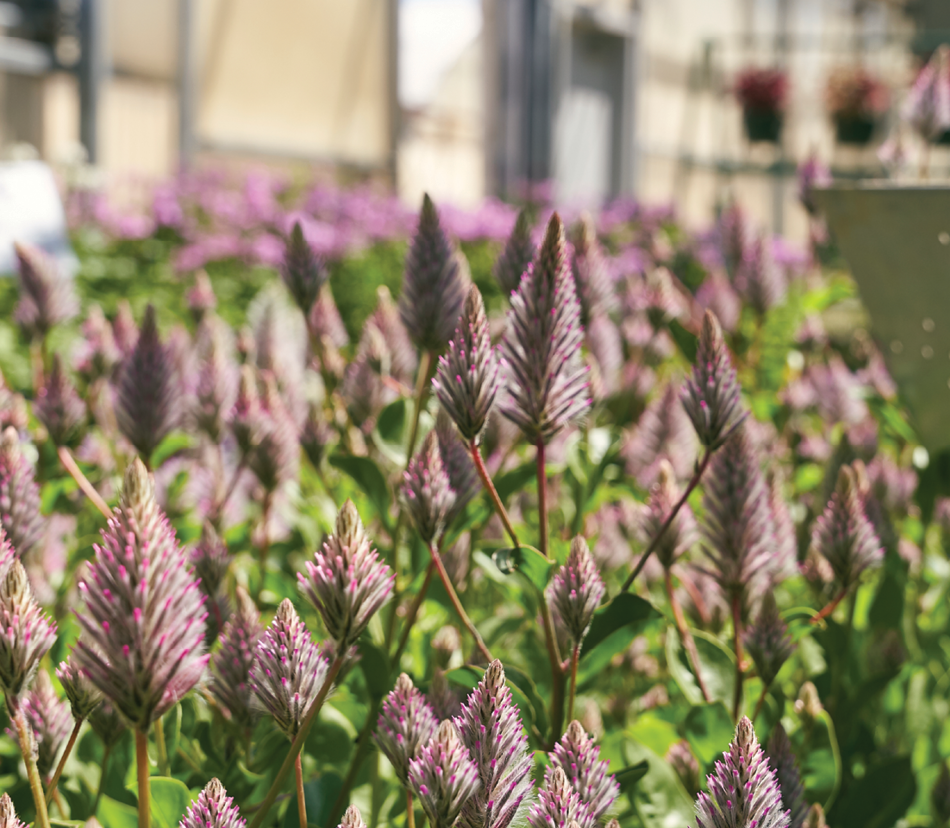
Fiore’s discerning eye for new varieties and his ironclad relationship with vendors keep the retail benches full of fresh plant material. He also relies on several southern-area trial sites for help in choosing each year’s inventory. The trials provide Fiore with plant species that are more conducive to the Texas heat his customers experience for several months out of the year.
Because Smith’s grows about 90% of the annuals and perennials it sells, the stakes are even higher to select the best new performers each year.
“We are very big on the new varieties,” Fiore says. “If I can get it a year before Lowe’s and Home Depot have it, I’m all for it. And that’s getting harder and harder to do each year, but I love having all the new stuff.”
Smith’s no longer grows anything in a six-pack, and Fiore has started transitioning away from 4-inch material.
“We still grow some of the basic material from seed, like periwinkles, marigolds, begonias and impatiens, in a 4-inch, since that’s the stuff people put out in masses,” he says. “But things that we used to grow in a six-pack, we changed to a 4-inch. And a lot of things that we used to grow in a 4-inch, we’re now growing in a 4.5-inch, quarts or a 6-inch.”
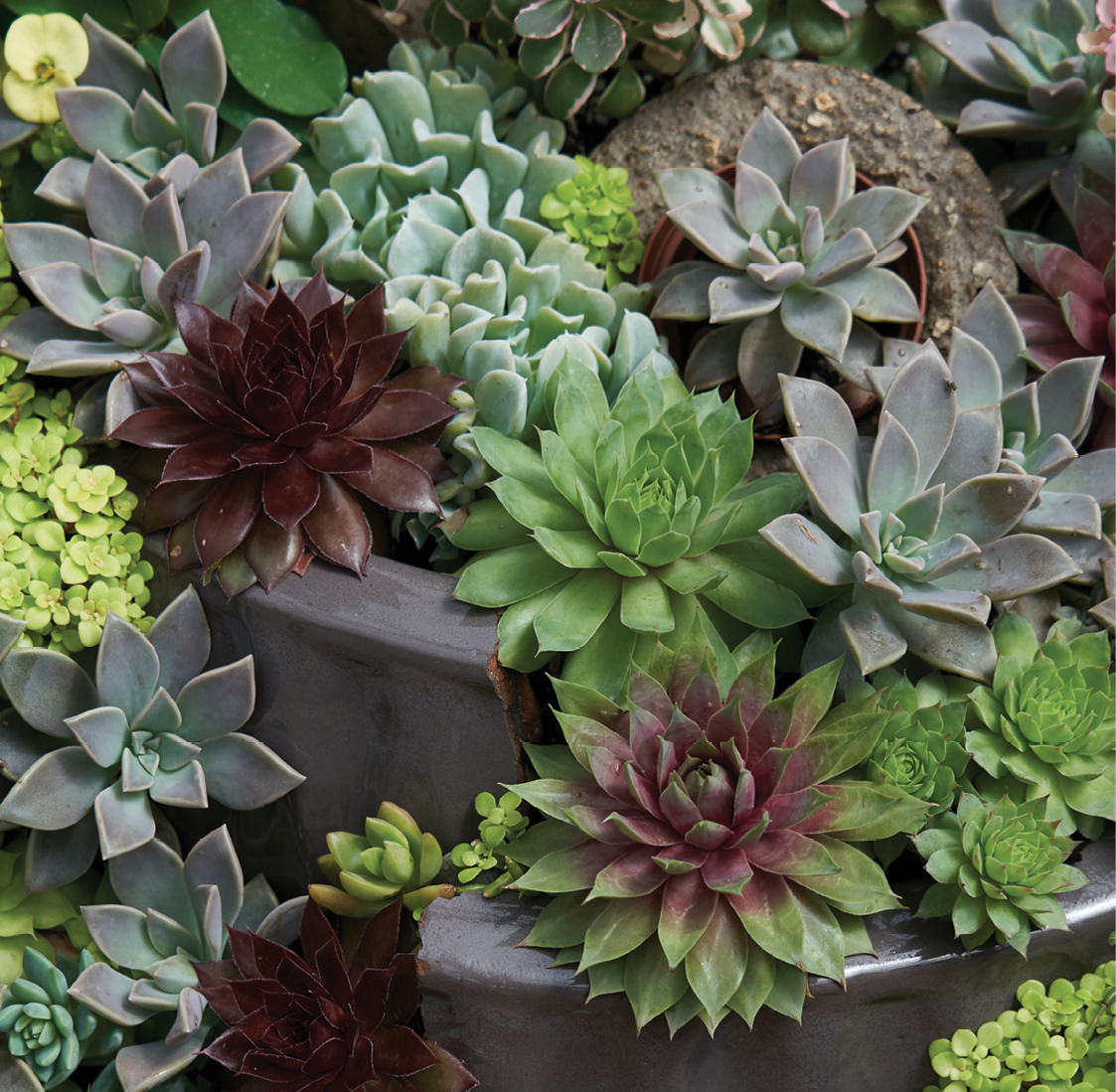
Annuals are Smith’s top seller, with about a 70-30 split between annuals and perennials. But perennials sales are increasing, Fiore notes.
“Annuals are our moneymakers, and we’re known for having really nice annuals that we grow here. But the perennials category has been growing like crazy. Now, we haven’t seen a decline in annuals. It’s just that perennials have been coming up,” he says. “I think customers are seeing (the perennials message) everywhere. And a lot of the younger demographics want perennials more so than annuals. There’s still the big push for pollinator plants, and a lot of people want sustainability. They don’t want to replant year after year, so perennials have been growing in popularity because of that.”
Behind-the-scenes look
Fiore isn’t just wild about new annuals and perennials. He’s on the hunt each year for new poinsettia varieties, and his customers count on him to offer the unusual types and colors. Red is still the No. 1 seller, he says, but in 2024, the business grew 32 varieties of poinsettia.
One of Smith’s largest events coincides with poinsettia season. Around Thanksgiving, when the production greenhouses are wall-to-wall with poinsettias, Smith’s hosts an open house, with live music, food and drinks. And everything is open to the public, even the growing houses.
“Every hour or so, I put on a microphone and show people how we plant everything. We show them the potting room, how we do the production, and then show all the different poinsettia varieties,” Fiore says.
Those production tours help connect consumers to the realities of production, something most of them knew nothing about.
“Anytime I can get someone on a production tour, they’re usually hooked for life. They say, ‘I’m going to buy all my plants from Smith’s now,’ because they see everything. I go into detail about what soil we use, why we use it, why it’s better for our plants, how we plant them and how we care for them from start to finish. And throughout the year when we do classes, I’ll invite people to do a production tour. And they always tell me, ‘I had no idea that all this goes into growing a plant. I thought you just put a seed in a pot and that’s it.’ They feel like they got some insider information.”
More on the Top 100:
The 2025 Top 100 Independent Garden Centers List
Hear from Editor Patrick Alan Coleman on why we changed the list
Meet the Top 100: Hicks Nurseries, #2

Explore the July 2025 Issue
Check out more from this issue and find your next story to read.
Latest from Garden Center
- Emerald Coast Growers celebrates 35 years in business
- Zach Galifianakis is hosting a Netflix show about gardening
- Society of American Florists seeks nominations for floral industry awards; deadline April 1
- Pioneering progress
- Seed Your Future releases internship data for horticulture employers
- National Garden Bureau, All-America Selections recognize pepper breeder Terry Berke, Territorial Seed Company President Tom Johns
- Cool tech for garden retailers
- The Growth Industry podcast Episode 10: State of the Horticulture Industry