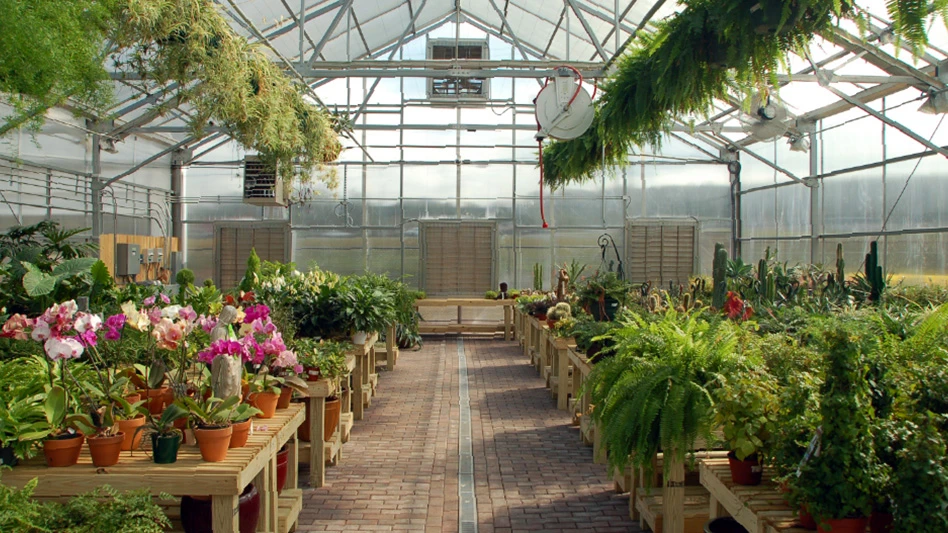
Pythium crown and root rot is a troubling disease for many growers and, at times, may seem unavoidable and tough to control. It doesn’t have to be that way if you follow these control tips.
{sidebar id=57}
Optimize growing conditions. Plants growing well with minimal stress are less vulnerable to attack. The growing medium should drain well so roots are never waterlogged.
Keep facilities clean. Never underestimate the ability of Pythium to hang out in a greenhouse on flats, benches, floors or hoses. Always clean growing surfaces and structures between crops. First, use a pressure washer with soap and water. Second, treat cleaned surfaces with a disinfectant to remove any remaining unseen problems.
Scout frequently. Detect and identify root rot early while fungicide drenches are most effective. When fungicides are needed, start early. If Pythium has a significant head start, the root system of some plants will be too rotted and a fungicide drench won’t be able to rescue them.
Use full-labeled chemical rates. A fungicide program won’t work unless full-labeled rates are used. Skimping on rates is likely to sabotage your efforts. However, using rates higher than the labeled rate is also asking for trouble. Some plants may die even after fungicide treatment. This is especially true when the treatment is started late. Without a fungicide drench, it is likely that many more plants would die.
Reapply fungicides promptly. One application is rarely enough. Knowing when to reapply can be tricky. Many fungicides provide protection for a limited time, after which Pythium may again cause root rot. The labeled application rates are an indication of the length of time that protection can be expected. For example, if the label indicates that fungicide drenches should be reapplied every 30-60 days, the shorter interval of 30 days should be used when Pythium has been detected. Sometimes the disease is moving so quickly that a relatively short interval of 14 or 21 days between applications is needed. You can alternate fungicides to make sure you stay within the label requirements.
Avoid resistant strains. If timely fungicide drenches have been made using appropriate rates and root rot continues to be a problem, take a hard look at the controls used. If Subdue MAXX has been the only or primary fungicide used over the years for Pythium control, it is possible that the fungus has become resistant and is no longer affected by this fungicide. To be sure, test the Pythium in your greenhouse at a diagnostic clinics.
To avoid the development of chemical resistance, rotate among the different active ingredients available among fungicides.
Persistent problems require special attention. Some growers seem to be in a “Pythium rut.” When Pythium is a predictable problem, it is time to stop and re-evaluate your program. Ask yourself:
1. Is Pythium coming in on plugs or prefinished plants? Plants may harbor low levels of Pythium that is not obvious on incoming plants.
2. Is there a reservoir of Pythium in the greenhouse? There may be a trouble spot in the greenhouse feeding the problem. Perhaps a holding tank or irrigation reservoir needs to be emptied and cleaned.
3. Are you reusing plug flats to germinate seedlings? Even the best efforts to clean and sanitize used flats are often not enough to give tender seedlings the healthy start they need. Always use new flats for seedlings.
4. Are you using the most effective fungicides? Applying only Pythium fungicides proven to be good performers is a must. If you treat with products that are not highly effective, Pythium will gain the upper hand. Also, double-check the rates and calibrations to ensure that the correct amount of active ingredient is reaching the root zone.
Testing chemical controls
New research trials were conducted at

Other trials have focused on products that are not yet registered but hold promise for Pythium control.
This research was funded through a Specific Cooperative Agreement between the USDA/ARS Plant Protection Research Unit,
{sidebar id=1}
- Mary Hausbeck
Latest from Garden Center
- The Growth Industry Episode 10: State of the Horticulture Industry
- Scientists develop vitamin A-enriched tomato to fight global deficiency
- Tennessee Green Industry Field Day scheduled for June 11
- UTIA and UT Knoxville research teams will develop automated compost monitoring system
- Ken and Deena Altman receive American Floral Endowment Ambassador Award
- Native before it was cool
- Proven Winners partners with Pure Line Seeds to offer vegetable plants
- [WATCH] Taking root: The green industry’s guide to successful internships