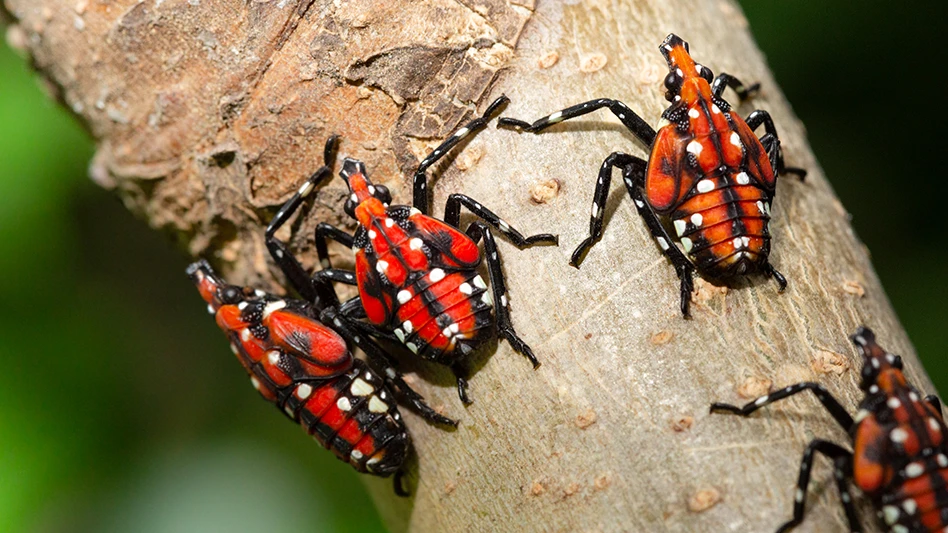
Controlling population peaks on the edges of the gypsy moth range may help to slow their invasion, said Ottar Bjornstad, associate professor of entomology and biology at
“Slowing the spread of the gypsy moth is a priority in forest management in the
Bjornstad and his team found the gypsy moth’s invasion in the
“This is the first identification of pulsed invasions for an invading species,” he said.
The team used historical, county-level quarantine records as well as forest service data from more than 100,000 pheromone traps set along the expanding gypsy moth population front for their theoretical model. The pheromone trap data were collected from 1988 to 2004.
They used a theoretical model to show how an interaction between negative population growth at low densities -- the Allee effect -- and the existence of a few satellite seed colonies created by human transfer over long distances, explain the invasion pulses. The gypsy moth adult is flightless and usually only spreads a short distance beyond infestation boundaries. External colonies occur when moths hitch a ride on vehicles or other items relocated by people. Because gypsy moths exhibit an Allee effect, the low populations are insufficient for establishment of permanent populations.
This is also true at the edges of the population area. If the population density is low, the Allee effect prevents growth across the boundaries.
{sidebar id=2}
For more: Ottar Bjornstad,
Latest from Garden Center
- Proven Winners partners with Pure Line Seeds to offer vegetable plants
- [WATCH] Taking root: The green industry’s guide to successful internships
- Award winners announced for 2026 PHS Philadelphia Flower Show
- Kansas City botanical garden Powell Gardens acquires IGC Colonial Gardens
- Art Van Wingerden appointed chair-elect of American Floral Endowment
- U.S. horticulture operations report $18.3 billion in sales: USDA
- Stonehouse Nursery announces ownership transition from founders to nursery manager
- From Structure to Storefront: The Retail Greenhouse Features Worth Planning For