We’ve all heard the warnings: keep your credit card information safe. Don’t let anyone see you punch in your PIN code. Be smart about where and how you swipe that card. Otherwise, identity thieves can take you for a ride. Fortunately, banks and credit companies have been expected to reimburse victims of credit fraud in the past.
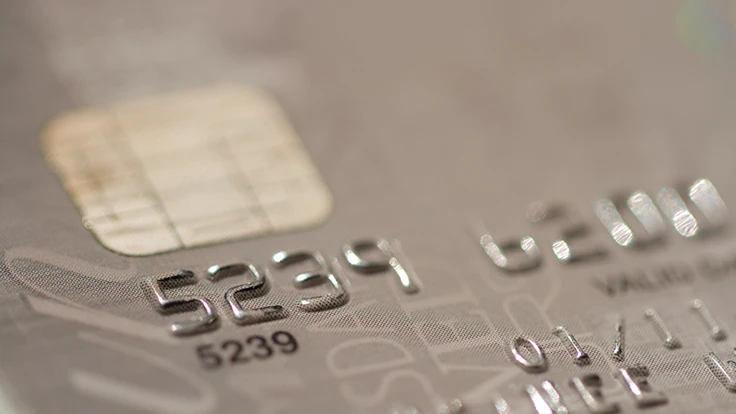
That is changing with the onset of the EMV system. EMV (Europay, Mastercard and Visa) is a new transaction processing technology designed to cut down on fraudulent credit card purchases by installing micro-processing chips into credit and debit cards. Thursday, Oct. 1 is the deadline for retailers to equip their operations with EMV-capable sales terminals, or they will shoulder the financial burden of any purchases via stolen credit cards or information.
EMV-enabled terminals can be obtained through several third-party providers, including point-of-sales systems vendors and credit companies. Robert Hendrickson, who recently launched Next New Planet, says some garden retailers are scrambling to update their equipment in time for the shift in fraud liability.
“The garden centers are having to chase down some of the POS systems and get their equipment quick enough,” Hendrickson says. “I thought maybe they’d be more proactive. They all know what’s coming, they all know they need to comply, but they were hoping that their POS companies would be a little more proactive in helping them get ready.”
Many garden centers have not yet adopted POS systems, either. According to Garden Center's 2014 State of the Industry Survey, 43 percent of the 542 respondents said they did not have a POS system, the majority citing low sales volume and the expense as reasons. (Look for 2015 results in our November issue.)
EMV cards and readers differ from the familiar magnetic strip technology, which enabled customers to complete their purchases with a quick swipe. An EMV-compliant card must be left in the reader for the duration of the transaction, says to Ralph Moore, manager of inside sales with the Lawn and Garden Dealers Association.
“The terminal doesn’t work any different once you put the card in,” Moore says. “You just put that amount in and hit enter, but you have to leave the card in the terminal until the transaction is complete. If you don’t do that, you will interrupt that transaction. I’ve seen them work and it’s really not that much slower.”
In any event, Hendrickson thinks the new EMV standards and technology will require adaptation on the part of both retail staff and customers.
“It’s a new sort of habit, and habits are hard to break and hard to start,” Hendrickson says. “I think, as a society, we’re all used to swiping [a credit card] and putting it back in your wallet. I’m thinking this is going to be one a learning curve where people are going to stick [their card] in the machine, forget it and walk away.”
Processing an EMV purchase works by opening direct communication between the card and reader. Moore says this cuts down on credit fraud by randomizing codes and making card data less valuable to thieves, as each stolen card can effectively only be used once.
“When a person walks in with a stolen card, they’ll be able to use it once, but every single time that you swipe that card, the code changes,” Moore says. “Therefore, if somebody breaches a system and all those cards are EMV microchipped, then that person selling all those card numbers … who’s going to want a card they can only use once? That in and of itself is going to cut down tremendously on the amount of fraud somebody can commit.”
EMV technology has produced some tangible success at reducing credit card fraud when implemented broadly. Since Europe completely converted to EMV technology, the continent has seen an 80 percent decrease in credit card fraud, while the United States has seen a 47 percent increase, according to a 2013 report by Discover Financial Services.
However, some have questioned whether or not credit card fraud is a serious issue at garden retailers. Hendrickson says this question was raised at a recent Garden Center Group conference in Orlando, Fla.
“This topic came up and one of the guys said all this change and concern for us is trying to fix a problem that doesn’t exist at our store and probably even in our industry, it’s so small,” Hendrickson says. “I felt that was a really good snapshot that it’s probably not as big of an issue as it is in other kinds of retailers. We may be playing along with trying to fix a problem that we don’t have.
“It happens in odd places, so I guess we’ll just have to play along with the rest of the retail world."
Stay tuned to our website for more updates, and read the full report about how garden centers are adapting to EMV technology in our November issue.
Latest from Garden Center
- UTIA and UT Knoxville research teams will develop automated compost monitoring system
- Ken and Deena Altman receive American Floral Endowment Ambassador Award
- Native before it was cool
- Proven Winners partners with Pure Line Seeds to offer vegetable plants
- [WATCH] Taking root: The green industry’s guide to successful internships
- Award winners announced for 2026 PHS Philadelphia Flower Show
- Kansas City botanical garden Powell Gardens acquires IGC Colonial Gardens
- Art Van Wingerden appointed chair-elect of American Floral Endowment