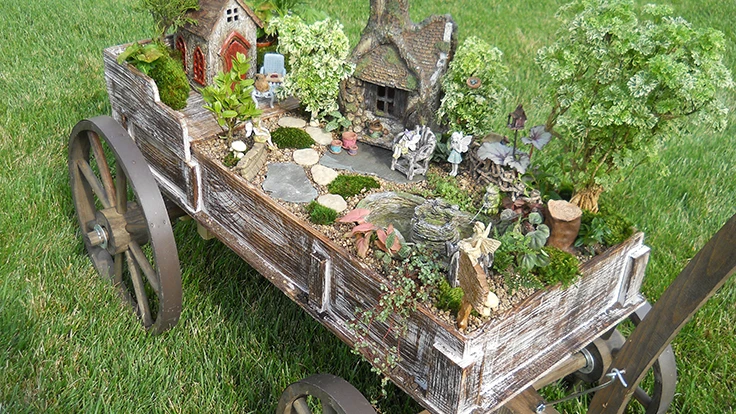
Creating fairy gardens is often an exercise of imagination and fantasy, but that doesn’t mean there’s no hard science involved.
As co-owner of garden supplier Mulberry Miniatures (formerly known as Faery Plant Kingdom), Mark Langan has seen too often fairy gardeners and retailers who plant or merchandise flowers and decorative shrubs with mismatched accessories and incompatible varieties. These practices often led to confusing displays and dead plants, so through Mulberry Miniatures, Langan advocates for planting environmentally complementary varieties together in fairy gardens.
“What we found happening was the garden centers were allowing people to build these fairy gardens and the plants were horticulturally incompatible,” Langan says. “So, they were mixing sedums and hens and chicks with golden baby tears. Fine, it looks cute when you make it but [some plants are] going to be dead in a very short time. We really do stress that compatibility.”
Fairy gardening as a trend has expanded rapidly in recent years, thanks in large part to a wide range of studios specializing in unique and whimsical figurines that IGC customers gravitate toward. Langan says growers need to catch up with the trend by marketing their green goods with mini-landscapes in mind.
“This whole thing has really been hard goods-driven and the growers are kind of late getting into offering a proper selection of plants, but I think we’re catching up quickly,” Langan says.
Bringing green goods closer to the forefront of the fairy gardening genre requires a healthy amount of education on Langan’s part, he says. This means equipping his customers with knowledge of the major horticultural categories and how to use them.
“What we’ve done is have the four different horticultural groups: hardy sun, hardy shade, tropical sun and tropical shade, so people have success with this,” Langan says.
A cornerstone of compatible and consistent fairy garden designs, Langan says, is matching the themes of figurines and accessories with plants that make sense. For example, retailers could merchandise succulents with western-themed accessories like porcelain lizards, cowboys and wagons, or match hardy sun perennials with English-cottage style fairy villages. With an understanding of themed accessories and horticultural compatibility, the possibilities are many.
“We try to make the plants match the accessories,” Langan says. “Having ferns, begonias and African violets with a cowboy desert scene doesn’t really work. We put the accessories in their appropriate landscape themes and that helps people narrow down the look they want to try to achieve.”
Latest from Garden Center
- UTIA and UT Knoxville research teams will develop automated compost monitoring system
- Ken and Deena Altman receive American Floral Endowment Ambassador Award
- Native before it was cool
- Proven Winners partners with Pure Line Seeds to offer vegetable plants
- [WATCH] Taking root: The green industry’s guide to successful internships
- Award winners announced for 2026 PHS Philadelphia Flower Show
- Kansas City botanical garden Powell Gardens acquires IGC Colonial Gardens
- Art Van Wingerden appointed chair-elect of American Floral Endowment