Graphic courtesy of Floral Marketing Fund
Generation Z is already shaping the floral marketplace, and the industry can’t afford to guess what motivates them.
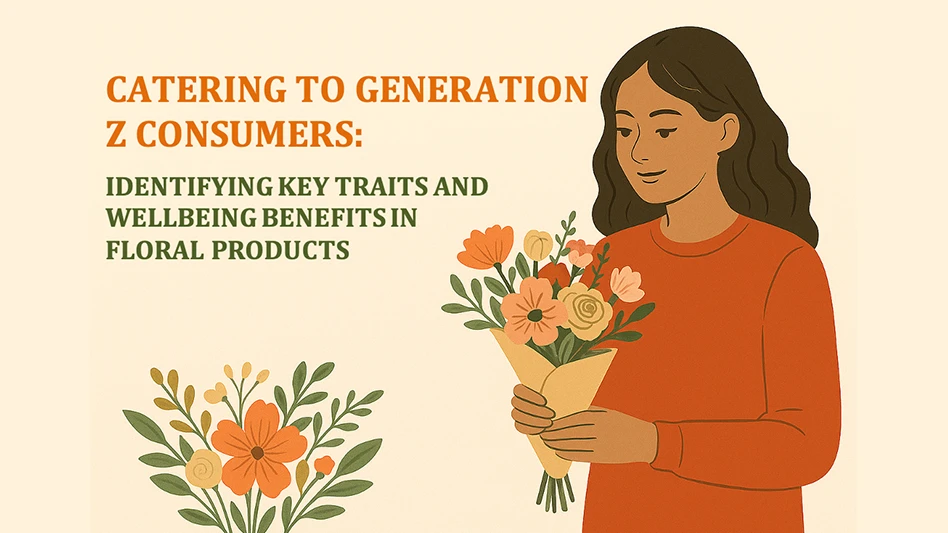
The Floral Marketing Fund has completed a new nationwide study, Catering to Generation Z Consumers: Identifying Key Traits and Wellbeing Benefits in Floral Products, exploring how Gen Z consumers (ages 18–28) purchase flowers and plants, what influences their buying decisions, and how floral products connect to emotional wellbeing.
Completed by the Lab for the Assessment and Promotion of Physical Activity and Health at Colorado State University, this research surveyed 2,011 Gen Z participants across the United States, offering a detailed look at the expectations and behaviors of one of the up-and-coming consumer groups in today’s market.
Gen Z is digitally driven, but not digital-only. Instagram and TikTok play a significant role in floral discovery and trend influence. Social media shapes awareness, inspiration and perceived trendiness. At the same time, physical retail remains highly relevant — seeing, touching and smelling flowers; interacting with staff; and making shopping social are strongly valued.
The takeaway: This generation moves seamlessly between digital inspiration and in-person purchasing. Retail strategy must reflect both.
Pricing is important. Gen Z compares prices, seeks value and responds to promotions. But cost is not the only driver. Freshness, color, design style, fragrance, longevity, sustainability practices and accurate labeling all significantly influence purchasing decisions. Gen Z evaluates flowers through both value and values.
Beyond the transaction
One of the most compelling findings extends beyond buying behavior.
The study examined perceived stress levels and the emotional impact of giving and receiving flowers. Participants reported positive associations between floral engagement and social connection. Both giving and receiving flowers were linked to emotional wellbeing, alongside a strong reported connection to nature.
For an industry rooted in meaningful moments, this provides additional measurable evidence that flowers are not simply products; they are experiences that support connection and emotional impact.
Sustainability and personalization matter
Environmental considerations influence this generation’s purchasing decisions. Recyclable packaging, transparent practices and eco-conscious behaviors are part of how Gen Z evaluates brands.
Packaging and personalization also play a role. Design, labeling and printed information influence appeal. Customization enhances perceived value. For retailers and marketers, these insights offer direction: Clarity, authenticity and thoughtful presentation matter.
Access the full report
See the full detailed data beyond the overall trends. Inside the complete study, you’ll find:
- Detailed purchasing frequency data
- Seasonal and occasion-based buying patterns
- Ranked product attributes and decision drivers
- Social media platform usage breakdowns
- Packaging and personalization insights
- Pricing sensitivity analysis
- Measured stress levels and wellbeing indicators
Download the full report and explore the data here. The full dataset provides guidance grounded in research on how to reach and connect with the Gen Z market.
There will be a webinar on the key findings and takeaways on May 13. This will include an opportunity to hear directly from the lead researcher, Kaigang Li, and ask questions.
This study is presented by the Floral Marketing Fund and co-sponsored by CalFlowers and FTD.
This article was written by Floral Marketing Fund staff.
Latest from Garden Center
- New internship data empowers horticulture employers
- Sustainabloom releases new sustainability template for wholesale florists
- How to help stop the spread of spotted lanternflies: Find egg masses
- National Garden Bureau, All-America Selections recognize pepper breeder Terry Berke, Territorial Seed Company President Tom Johns
- University of Florida ornamental breeding program unveils 50th (and 51st) caladiums
- American Floral Endowment 2026 scholarship applications now open
- Farm Bill passes out of House Committee on Agriculture
- Pioneering progress