Tomato plants in a St. Mary’s County, Md., greenhouse found to be infected with late blight caused by the fungus Phytophthora infestans have been destroyed. Some of the plants which had been planted in Charles County have also been destroyed.
Univ. of Md. extension plant pathologist Kate Everts reported that the grower who had the original outbreak did keep some high tunnel tomato production. Plants were found to have active sporulation on May 13 despite two fungicide applications.
Extension personnel have extensively monitored neighboring growing operations for additional infected sites and found none. The disease pathogen favors cool wet weather so the concern remains that it might spread to surrounding growing operations.
Commercial tomato growers in St. Mary’s and Charles counties and in nearby counties are being advised to apply a protectant fungicide such as chlorothalonil, Gavel or mancozeb. Growers should also scout aggressively looking for late blight symptoms. Growers should submit samples of suspect plants to a university or commercial diagnostic lab.
Univ. of Md. pathologists are conducting studies to try to determine where the disease originated and how it was introduced into the grower’s operation. The grower did not have any live plants that could have allowed the pathogen to overwinter. Officials are hoping that genotype information will provide some clues.
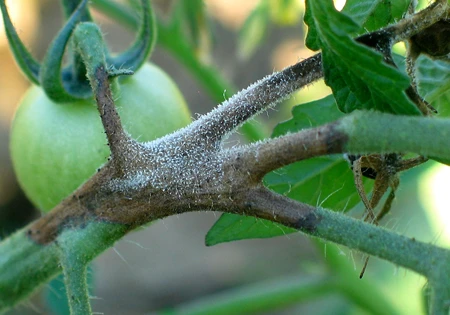
Pictured: Tomato growers in St. Mary’s and Charles counties, Md., are being advised to aggressively scout their plants for symptoms of late blight.
Photo by Meg McGrath, Cornell Univ.
Latest from Garden Center
- The Growth Industry Episode 10: State of the Horticulture Industry
- Scientists develop vitamin A-enriched tomato to fight global deficiency
- Tennessee Green Industry Field Day scheduled for June 11
- UTIA and UT Knoxville research teams will develop automated compost monitoring system
- Ken and Deena Altman receive American Floral Endowment Ambassador Award
- Native before it was cool
- Proven Winners partners with Pure Line Seeds to offer vegetable plants
- [WATCH] Taking root: The green industry’s guide to successful internships