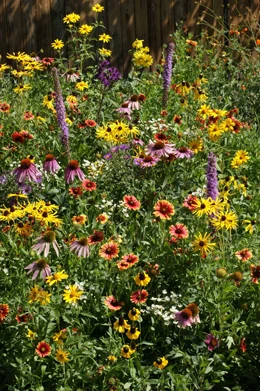
Here are some tips for growing wildflowers, courtesy of The National Gardening Bureau. You might want to share this report with your customers, who certainly would appreciate the expertise -- and recognize your store as "the place that knows" gardening.
Wildflowers are one of Mother Nature’s loveliest gifts. Their changing panorama of colors, shapes, sizes and heights provides delight throughout the seasons. In the home landscape they are ideal for creating colorful beds and borders, as well as offering a lower-maintenance alternative for large areas or for replacing turf grass.
A garden of wildflowers offers several benefits to both the gardener and the environment. Once established, wildflowers require less maintenance than traditional landscape plantings—less watering, fertilizing, pest control and mowing. The flowers provide nectar and pollen sources for bees and butterflies, while ripened seeds are a food source for birds and other wildlife.
Today’s marketplace abounds with choices to create a unique wildflower garden. Local nurseries and garden centers sell both seeds and live plants. Retail, internet, and catalog seed companies sell wildflowers as individual species as well as mixes that have been formulated for a specific geographic region. Many seed companies also sell mixes for a variety of special uses—wildflowers for cutting, fragrance, partial shade, attracting butterflies or pollinating insects, and more.
Planting wildflowers requires the same type of care as traditional ornamental plants. Start with high quality seed and select varieties that are suited to your conditions. Wildflowers will grow and bloom best when the environmental conditions meet their requirements. Sun exposure, availability (or lack) of moisture, and soil type all affect plant growth. For example, if you have a hot, sunny garden, look for wildflowers or wildflower mixes that thrive in those conditions.
The next step in creating an eye-catching field of flowers is to prepare the soil by removing weeds and other unwanted vegetation. If the soil is compacted, till lightly so the soil is loose and germinating seeds can put down roots. A bow rake is great for loosening the top layer of soil. Digging or roto-tilling too deep will bring up weed seeds and other plants that will need to be removed later to avoid competing with the wildflower seeds.
Scatter seeds by hand or with a small spreader. Seeds can be raked into the soil or lightly covered with soil. If sowing straight seed adding inert matter such as dry sand or vermiculite will assist in an even distribution of seed. Water thoroughly right after planting and keep seeds and seedlings moist for about 4-6 weeks. Gradually reduce watering as seedlings develop. Identify and remove weed seedlings as soon as possible since they will compete with wildflowers for water, nutrients and space.
A wildflower planting, just like a colorful meadow created by Mother Nature, will look different from month to month and year to year. Annual flowers are more abundant at first because they grow and flower quickly. In following years perennial plants become established and start flowering, in addition to annual flowers that may reseed themselves. Each season and each year the informal beauty of wildflowers gives surprises of color and splendor for everyone to enjoy.
Latest from Garden Center
- The Growth Industry Episode 10: State of the Horticulture Industry
- Scientists develop vitamin A-enriched tomato to fight global deficiency
- Tennessee Green Industry Field Day scheduled for June 11
- UTIA and UT Knoxville research teams will develop automated compost monitoring system
- Ken and Deena Altman receive American Floral Endowment Ambassador Award
- Native before it was cool
- Proven Winners partners with Pure Line Seeds to offer vegetable plants
- [WATCH] Taking root: The green industry’s guide to successful internships