Salt-tolerant, drought-tough, long-blooming. And if given moderate care, oleanders can provide years of color to low-maintenance landscapes.
There is a small catch, though. The oleanders (Nerium oleander) are just moderately cold hardy to USDA Hardiness Zone 8; higher, they may survive only as herbaceous perennials.
But where they thrive, they flourish. Oleanders are profuse bloomers, with abundant flowers on terminal cymes in white, weak yellow, salmon, red, cardinal red, pink, hot pink and purple-red, in singles and doubles. More than 400 varieties have been introduced.
Usually grown as medium shrubs or small trees to about 20 feet tall, oleanders spread by suckering and can overrun a small landscape if not contained. They thrive in full sun to partial shade, but if planted in deep shade their flowering will diminish. Oleanders are tolerant of most soils, including deep beach sands, though they may not be as vigorous in heavy clay. They can be shaped by pruning as shrubs -- in bouquet, umbrella and multistem forms -- or as single-trunk trees. The time of year when oleanders are pruned can affect flowering and hardiness. Varieties with a short blooming period, which usually occurs during the first weeks of spring, can be pruned anytime after flowering, and all of them can be pruned up to about 14 weeks before an expected first freeze.
The International Oleander Society reports that established oleanders do not need to be fertilized to be attractive, but that light fertility may increase growth and flowering. As a general recommendation, apply 2 pounds each of actual nitrogen, phosphorous and potassium to 1,000 square feet of the area landscaped in oleanders, one application each in early fall and early spring.
Popular, but poisonous
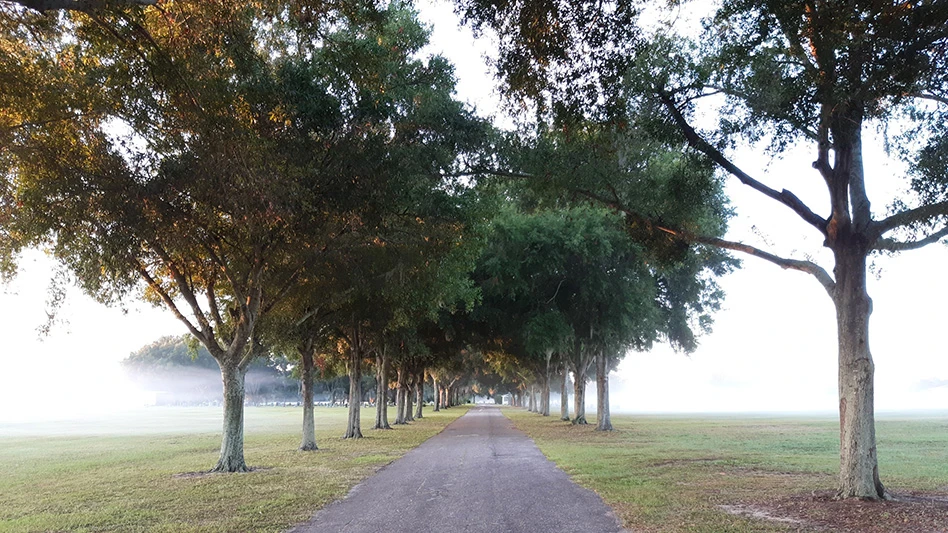
Because of their low maintenance and long flowering, oleanders are very popular along the
 Several dwarf varieties are in the trade. Ronald Arkay, owner of Green Tree Landscape Nursery in
Oleanders are generally trouble-free. The most serious pest may be the oleander caterpillar. Arkay said the caterpillar is rarely found on oleanders planted in highway medians in the midst of auto exhaust and along seashores where they are sprayed with salty mist. Aphids on new growth can be washed away with a garden hose. Scale infestations, though not common, can be persistent and hard to control.
Oleander seeds germinate without pretreatment. Softwood cuttings root easily with 3,000 parts per million indolebutyric acid treatment. Plants also can be divided. Oleanders are easily transplanted by balling and burlapping.
{sidebar id=28}
Specifics
Name: Nerium oleander
Common name: Oleander.
Family: Apocynaceae.
Description: Profusely flowering shrub with long, straplike leaves. Takes trimming well and can be shaped into various forms, including small tree. Poisonous.
Uses: Windbreaks, massing, roadside planting, specimen plants, especially where salt spray is common.
For more: Green Tree Landscape Nursery Inc., P.O. Box 271002, Tampa, FL 33688; (800) 330-4733; fax (817) 933-1070. International Oleander Society,
- David Morgan
Photos by Roger Newton
Latest from Garden Center
- Jackson & Perkins expands into Canadian market
- Green & Growin’ 26 brings together North Carolina’s green industry for education, connection and growth
- Cincinnati Zoo & Botanical Garden debuting new perennial section at 2026 Breeder Showcase
- The Garden Conservancy hosting Open Days 2026
- Registration open for 2026 Perennial Plant Association National Symposium
- Monrovia's Bee a Winner program enrollment deadline approaching
- Fred C. Gloeckner Foundation Research Fund calls for 2026 research proposals
- [WATCH] The Cloud Makers inventor on how she made it rain at TPIE 2026