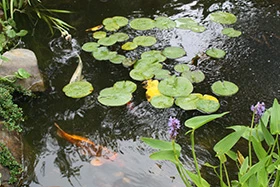
South Pleasantburg Nursery/ Photo by Michelle Simakis Water gardens can be a thing of beauty. They provide countless hours of relaxation and enjoyment. However, they can be an investment of time and money. It’s important to help customers weigh the pros and cons before they enter into this adventure. Below is a list of seven important factors customers should consider before they decide to install a pond and how garden centers can guide them through the process.
1. Have a plan in mind. They don’t want to enter into this without a strict budget and blueprint. Make sure to ask customers what their parameters are before you sell them pond supplies.
2. Get a professional opinion. Make sure they know the engineering involved in installing a water garden. Home gardeners can install it themselves but they have to make sure they can excavate the area, are familiar with plumbing and place the pond where it will be protected from water runoff.
3. Make a decision about fish in advance. Housing fish will change the entire construction of the pond, so it’s important they have a plan. Ponds designed to include fish should be deeper than ponds without fish, both to provide sufficient space for them to swim and to prevent freezing in colder climates. They also need to have places for fish to hide from predators.
4. Understand the maintenance costs of a pond up front. Hidden costs can crop up. Educate customers about the potential long-term costs of ponds up front so that they aren’t surprised or angry.
5. Consider adding water features. They carry an added cost for customers, but also added enjoyment. Carry products at various price points and for a variety of pond types and sizes and share their benefits with customers.
6. Don’t forget about the plants. Sooner or later customers are going to want to add ornamental products and plants to their ponds. Make sure there’s someone on staff who knows about pond plants and the care they require.
7. Know the climate. Help customers plan for the type of weather they have. If they live in an area that experiences harsh winters, ponds require more maintenance and become more expensive, because they have to be shut down during the winter months, equipment has to be removed or emptied so it doesn’t freeze. People in extremely warm climates need to be sure they refill their pond, as the heat can cause the water to evaporate.
Information courtesy of Pondliner.com. For more, visit www.pondliner.com.
Latest from Garden Center
- Proven Winners partners with Pure Line Seeds to offer vegetable plants
- [WATCH] Taking root: The green industry’s guide to successful internships
- Award winners announced for 2026 PHS Philadelphia Flower Show
- Kansas City botanical garden Powell Gardens acquires IGC Colonial Gardens
- Art Van Wingerden appointed chair-elect of American Floral Endowment
- U.S. horticulture operations report $18.3 billion in sales: USDA
- Stonehouse Nursery announces ownership transition from founders to nursery manager
- From Structure to Storefront: The Retail Greenhouse Features Worth Planning For