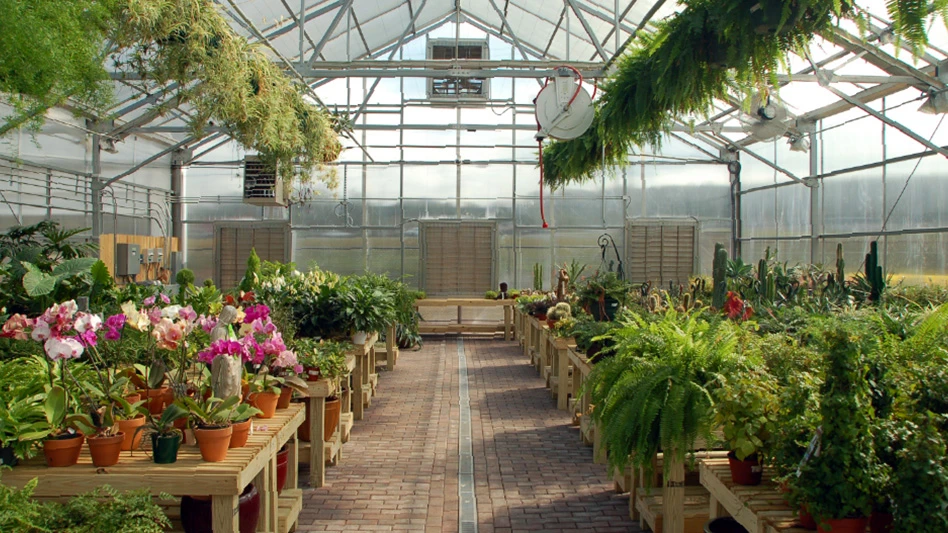
In a laboratory setting, the transgenic trees have absorbed TCE and other pollutants before processing them into harmless byproducts.
“This site presents the perfect opportunity to prove that poplars can get rid of pollution in the real world,” said Richard Meilan, a Purdue associate professor.
In the lab, transgenic poplar cuttings removed 90 percent of TCE in a hydroponic solution in one week. The engineered trees also took up and metabolized the chemical 100 times faster than unaltered hybrid poplars, which have a limited ability to remove and degrade the contaminant on their own, he said.
The transgenic poplars contain an inserted gene that encodes an enzyme capable of breaking down TCE and a variety of other environmental pollutants, including chloroform, benzene, vinyl chloride and carbon tetrachloride.
Meilan said planting transgenic trees in the field remains controversial, primarily due to concerns that inserted genes, or transgenes, might escape and incorporate into natural tree populations.
To protect the environment, Meilan’s team will take measures to prevent any plant material from leaving the site and will remove the trees after three years, short of the five it takes for poplars to reach sexual maturity, he said.
If the project succeeds, poplars may be used for phytoremediation elsewhere. Poplars grow across a wide geographic range and in many different climates, Meilan said.
{sidebar id=2}
For more: Richard Meilan,
March 2008
Latest from Garden Center
- The Growth Industry Episode 10: State of the Horticulture Industry
- Scientists develop vitamin A-enriched tomato to fight global deficiency
- Tennessee Green Industry Field Day scheduled for June 11
- UTIA and UT Knoxville research teams will develop automated compost monitoring system
- Ken and Deena Altman receive American Floral Endowment Ambassador Award
- Native before it was cool
- Proven Winners partners with Pure Line Seeds to offer vegetable plants
- [WATCH] Taking root: The green industry’s guide to successful internships