Problem: Heating fuel and electricity costs continue to rise, squeezing greenhouse profits. Excessive energy use creates pollution.
Solution: A solar energy system provides supplemental energy and decreases the grower’s carbon footprint.
Details: Lynn Dwyer, owner of Dwyer Greens & Flowers in
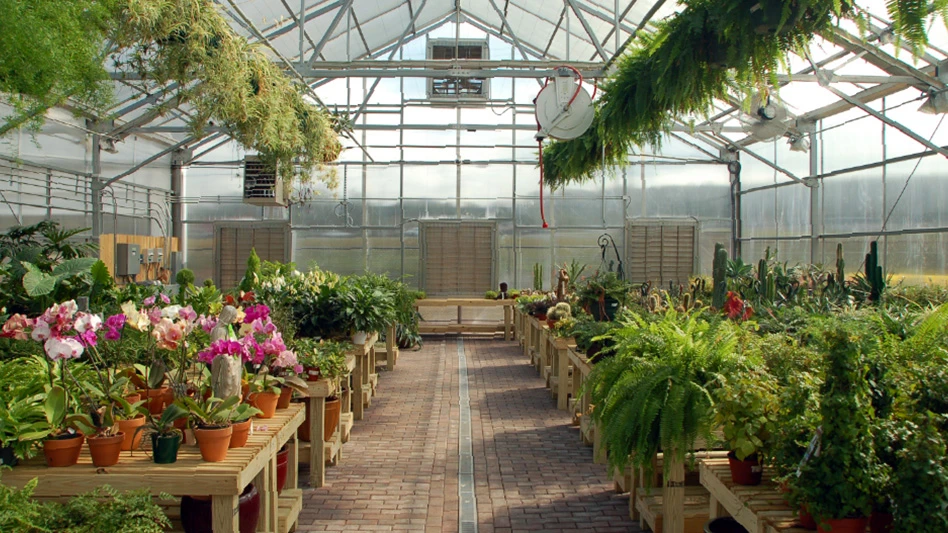
Dwyer grows annuals and perennials in three greenhouses that add up to almost 10,000 square feet. The largest house is a Nexus Grand Teton. She uses a lot of electricity in the summer to run fans and swamp coolers.
With an average of 259 sunny days a year and an elevation of almost 6,000 feet, solar power was a logical choice. Dwyer invested more than $100,000 in two systems -- a 56-panel photovoltaic system to generate electricity for the greenhouses and a solar thermal system to circulate and heat water for radiant floor heat in the head house, bench heat and gutter melt. Although the initial capital expense is high, Dwyer was able to cash in some tax credits awarded from the state of
“With utility company rebates and energy savings, payback could be eight to 15 years, depending on the cost of electricity,” Dwyer said.
The photovoltaic system was installed in October, so Dwyer doesn’t have a lot of stats on the system. But her January electric bill was less than the January 2006 bill, even after a new greenhouse was built this year.
{sidebar id=1}
“And if we produce more electricity than we’re using, the meter runs backward and we get a check from the electric provider,” she said.
For more: Dwyer Greens & Flowers, (970) 984-0967; www.dwyergreens.com.
Latest from Garden Center
- The Growth Industry Episode 10: State of the Horticulture Industry
- Scientists develop vitamin A-enriched tomato to fight global deficiency
- Tennessee Green Industry Field Day scheduled for June 11
- UTIA and UT Knoxville research teams will develop automated compost monitoring system
- Ken and Deena Altman receive American Floral Endowment Ambassador Award
- Native before it was cool
- Proven Winners partners with Pure Line Seeds to offer vegetable plants
- [WATCH] Taking root: The green industry’s guide to successful internships