.jpg) A.
A. .jpg) B.
B. Today’s emerging garden consumers want simple answers to the plea, “Just tell me what to do and where I need to do it.” They want simple, visual solutions that engage, inform, assure and inspire; without a word being said.
I like to break a signage needs into four levels, each represented by a query in the customer’s mind:
Level 1: Where is it or where are your …?
Level 2: What am I looking at …?
Level 3: What will it do for me…? (Close the sale!)
Level 4: Surprise me. Inspire me! Tempt me!
Level 1 was always answered by large signs named after well-known products such as Shade Trees, or categories like Lawn Care. Emerging customers respond better to words or phrases that relate to their lives such as Tall Trees, Fragrant Shrubs, Incredible Edibles, Lawn Food and so on.
.jpg) A.
A. .jpg) B.
B.
.jpg) C.
C. .jpg) D.
D.
.jpg) E.
E. .jpg) F.
F.
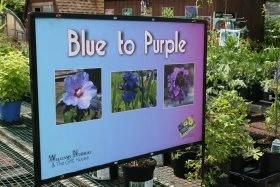
Level 1 signs should answer the question, "Where is it?” (A) “Where are your…?” signs should be easy to relate to, like this. (B) Nice wording, but un-exciting. (C) Graphics and clear wording make this quick and easy to follow. (D) A good, clear, “Where is it..?” sign. (E) Good use of an emotional sales word, connecting the dots for the shopper. (F) The word “Abundant” promises plenty and success – great sign!
Level 2 replaces an employee’s verbal product knowledge. “This plant gets 5-feet high by 3-feet wide, with dense leaves and deep blue flowers in summer,” “$8.99 for a 1-gallon;” “$24.99 for a 3-gallon.” Factual but not exactly emotional.
.JPG) A.
A. .jpg) B.
B.
.jpg) C.
C. .jpg) D.
D.
.jpg) E.
E. .jpg) F.
F.
Level 2 signs answer the question, “What am I looking at..?” (A) This is a challenge for all but extreme plant shoppers! (B) Technically correct, but no emotional connection for the reader. (C) Clear, simple and very easy to relate to a customer’s situation. (D) Informative, suggestive, professional -- a good “Silent Seller.” (E) Even better, a direct suggestion of use. (F) A sign that helps unravel the mystery of the chemical dept and with a whimsical cartoon too!
Level 3 adds the emotional “Ka-Ching” line that many employees fail to understand and use when talking to a customer. Hobbyists might read No. 2 above and relate, but the emerging consumers need much more to overcome their lack of information and confidence. Signage has to connect the dots for them with an additional phrase like, “Dense, year-round bush makes this a great privacy plant.” “Blue flowers go with white, gray or yellow trim.” “A good plant for busy people.” “Loves our local soil!”
Notice all those emotional words such as year-round, privacy, pets, kids, busy people, etc., that customers can relate to their own lives.
.jpg) A.
A. .jpg) B.
B.
.jpg) C.
C. .jpg) D.
D.
.jpg) E.
E. .jpg) F.
F.
.jpg) G.
G.
Level 3 signs answer the question, “What will it do for me …?” These signs help close the sale! (A) “Good for burns ... hmm ... I never knew that…” (B) “ Well, that’s we need in our yard.” (C) “Cute, we should do that.” (D) “Nice idea, we should get some, they are customized?” (E) “That’s really helpful; no one could tell me at that other place.” (F) “So I get bigger plants at this place, great!” (G) “Hey, they’re guaranteed if I use this stuff ... let's give it a try.”
Level 4 can both introduce excellent products that customers had no idea existed such as the quarter-inch soaker hose for veggie gardens, or something that signs and/or displays make just irresistibly cute. Humor can be a great addition here; people love cute or whimsical phrases such as “Berried Treasure.” Signs can tempt people with financial incentive, too, such as “Hide the neighbors for $99.” Temptations should be aimed at the senses as well as the wallet. Just reading a label on a Rose called ‘Jude The Obscure’ that says “…on a warm day smells of summer strawberries and crisp white wine” would tempt many to indulge in buying the rose.
.JPG) A.
A. .JPG) B.
B.
.jpg) C.
C. .jpg) D.
D.
.JPG) E.
E. .jpg) F.
F.
 G.
G.  H.
H.
Level 4 signs fill this customer need: "Surprise me. Inspire me! Tempt me!” (A) “Oh that’s so cute, how much are they?” (B) “Low allergenic plants, sign me up!” (C) “Good idea, I never know what goes with what.” (D) “Hey, they will also plant it for us; maybe we should get bigger sizes in that case.” (E) “I always look at this table; these people know their stuff here." (F) “Only once a year? Good, I thought they needed a lot of work.” (G) “That’s just a picture behind there but it sets it in place nicely ... maybe we should think of a set like that for our patio.” (H) “Oooh I love the smell of Basil. Load me up!”
Imagine that!
As well as helping customers to spend, a signage program sets or re-enforces the tone of the company. Signs can build ambiance and create the shopping experience (good or bad). Some managers expect employees to have clean uniforms, yet never think of fading or obsolete signs as having the same impact on ambiance. The brand image of the company can be upgraded very quickly with a professional, coordinated sign program.
 A.
A.
 B.
B.
Summary pictures: (A) Signage can build ambiance very cost effectively. (B) A great combination, visuals, suggested use and the company logo. This sign engages, informs and assures in professional style, and it didn’t cost a fortune.
Thyme is short
This industry has so many products that don’t look, sound or smell very emotional or inspirational. In previous decades shoppers could connect most dots, so signage was functional, informative and dry. Nowadays as garden center shopping time declines, signage has to attract, engage, inform, inspire and assure in a few minutes, without a word being said—and all for the price of one part-time employee!
Contributing editor Ian Baldwin offers other useful ideas in his “TLC … Think Like Customers” sales training program, available at www.ianbaldwin.com.
Latest from Garden Center
- Jackson & Perkins expands into Canadian market
- Green & Growin’ 26 brings together North Carolina’s green industry for education, connection and growth
- Cincinnati Zoo & Botanical Garden debuting new perennial section at 2026 Breeder Showcase
- The Garden Conservancy hosting Open Days 2026
- Registration open for 2026 Perennial Plant Association National Symposium
- Monrovia's Bee a Winner program enrollment deadline approaching
- Fred C. Gloeckner Foundation Research Fund calls for 2026 research proposals
- [WATCH] The Cloud Makers inventor on how she made it rain at TPIE 2026