 A.
A.  B.
B.
The Wisconsin Nursery Association (WNA) has announced its 2010 Plants of the Year. They were selected as the Plants of the Year at the Wisconsin Nursery Association’s annual membership meeting and workshop.
The Woody Ornamental Plant of the Year is the Quercus muehlenbergii (Chinkapin Oak, A. above). A large shade tree with unique chestnut-like leaves, the Quercus muehlenbergii turns a deep yellow to orange-brown in autumn, contrasting well with its rough, ashy-gray bark. Its acorns are highly prized by wildlife. The Chinkapin Oak prefers full sun and can grow in dry and heavy clay soils. Since it is tolerant of urban environments and adaptable to most soils and pH levels, it makes a great choice as a replacement for ash trees. Because it is in the white oak group, it is not as susceptible to oak wilt as those in the red oak group. The Chinkapin Oak grows to a height of 40 to 60 feet tall with an equal spread. It is native to Wisconsin and hardy to zone 4b.
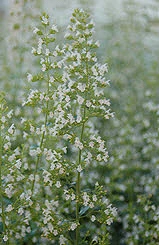
The Perennial Plant of the year is Calamintha nepeta var. nepeta ‘Montrose White’ (Montrose White Dwarf Calamint, B. above). Calamintha nepeta var. nepeta ‘Montrose White’ is a clump forming, well-behaved plant. It is covered with tiny white flowers for most of the summer, and has very fragrant leaves. Montrose White Dwarf Calamint grows anywhere with full sun and well-drained soil, including shrub borders, containers, and as an edging plant. It can grow up to 9 to 12 inches in height and 1 foot wide, and is hardy to zone 4.
The Wisconsin Nursery Association’s Plant of the Year Program was initiated to promote quality – and underused – plants to the public. Two categories were created to consider all plants: the Woody Ornamental category, which includes deciduous trees, evergreens, deciduous shrubs and shade trees, and the Perennial category, which includes herbaceous perennials, subshrubs, grasses, ferns, and vines.
The Wisconsin Nursery Association (WNA) has a history of more than half a century of serving the Green industry and its more than 200 members, which include growers, retailers and industry suppliers.
Latest from Garden Center
- The Growth Industry Episode 10: State of the Horticulture Industry
- Scientists develop vitamin A-enriched tomato to fight global deficiency
- Tennessee Green Industry Field Day scheduled for June 11
- UTIA and UT Knoxville research teams will develop automated compost monitoring system
- Ken and Deena Altman receive American Floral Endowment Ambassador Award
- Native before it was cool
- Proven Winners partners with Pure Line Seeds to offer vegetable plants
- [WATCH] Taking root: The green industry’s guide to successful internships