Most of us are aware of the serious situation regarding wild and managed bee populations in the United States, which have been declining at shocking rates over the past several years. But exactly how drastic are the losses, and what are the most heavily impacted areas?
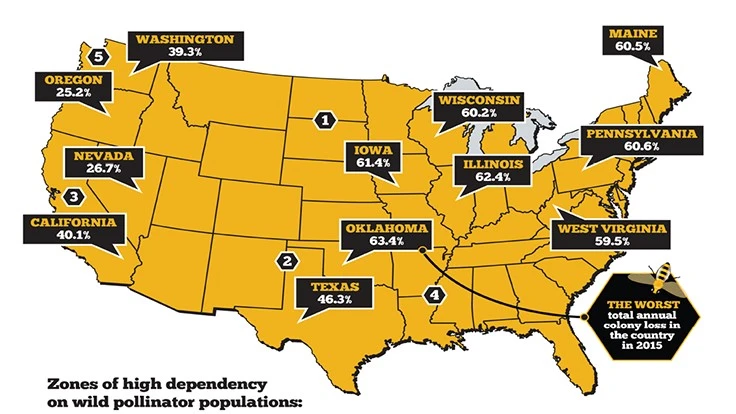
Using information from beeinformed.com and the University of Vermont, the graphic below maps out places with heavy pollinator loss and agricultural zones that especially depend on wild pollinators.
According to a Bee Informed Partnership survey of beekeepers, midwestern and eastern states suffered some of the most drastic winter season pollinator population losses recorded between 2014 and 2015. States near the East Coast also experienced serious colony loss between 2014 and 2015.
Some areas of the country rely more on wild pollinators than others. According to research by the University of Vermont, zones of high dependency on wild pollinator populations are concentrated in the following regions indicated by the numbers on the map. In addition, the percentages below represent the total annual colony loss in that state:


Explore the October 2016 Issue
Check out more from this issue and find your next story to read.
Latest from Garden Center
- The Growth Industry Episode 10: State of the Horticulture Industry
- Scientists develop vitamin A-enriched tomato to fight global deficiency
- Tennessee Green Industry Field Day scheduled for June 11
- UTIA and UT Knoxville research teams will develop automated compost monitoring system
- Ken and Deena Altman receive American Floral Endowment Ambassador Award
- Native before it was cool
- Proven Winners partners with Pure Line Seeds to offer vegetable plants
- [WATCH] Taking root: The green industry’s guide to successful internships